Rosemount, MN · Garage Door Service
Planning a new garage door in Rosemount? See why 1960s-70s homes here need insulated doors built for cold winters, and what installation day looks like.
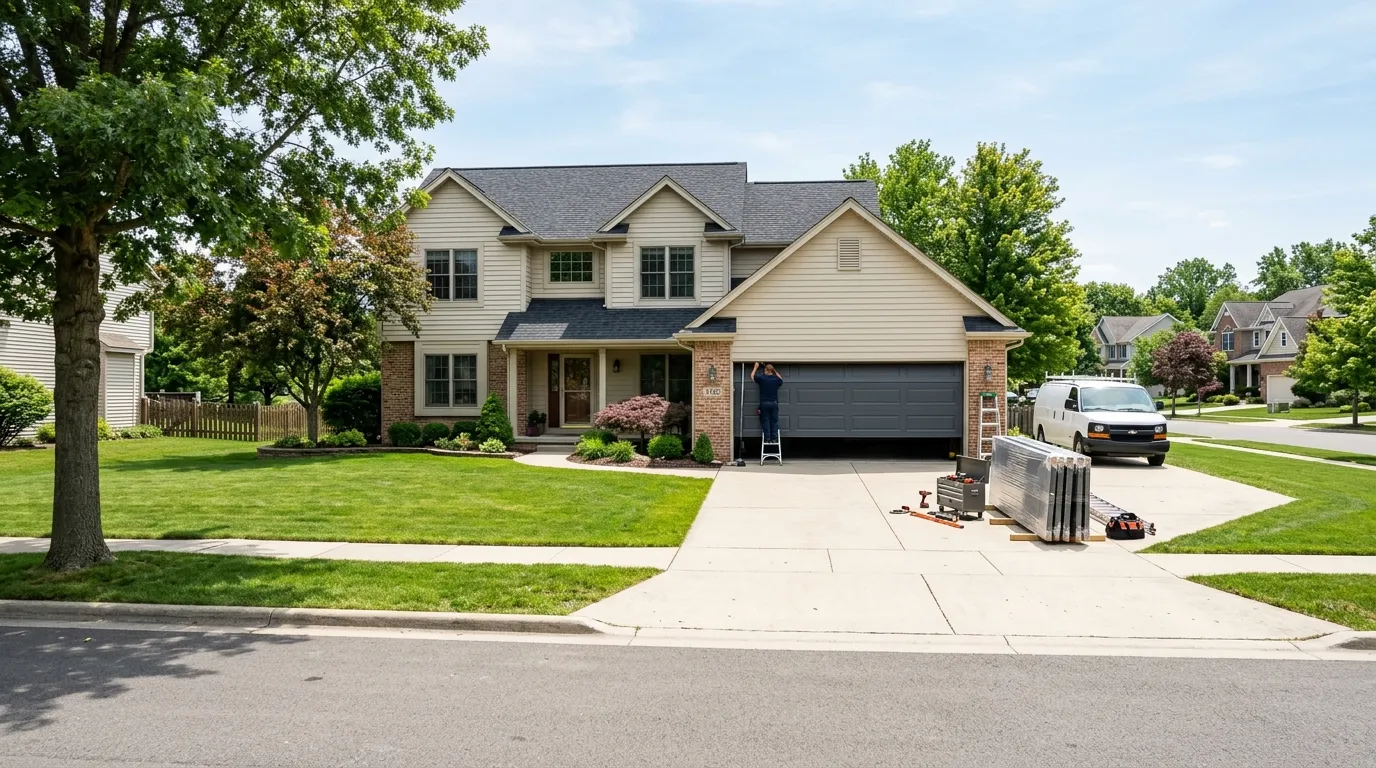
You're not calling about a broken spring. You're standing in the garage looking at a door that's dented, sagging on one side, or just plain done - the kind of door where every repair call ends with the tech telling you it's cheaper to replace than to keep patching. Maybe the panels are chalky and cracked. Maybe the bottom seal is gone and you can see daylight under it. Maybe it's a single-layer steel door from decades back that never had insulation to begin with, and now the garage runs as cold as the driveway. That's the point where installation, not repair, is the right conversation. A lot of Rosemount homeowners land here around the same age of house, because a lot of Rosemount houses were built in the same stretch of years and the doors that came with them are wearing out on the same schedule. If your opener is straining to lift a door that's heavier than it should be, or the door won't sit flush against the frame anymore, that's not a fix-it-Tuesday problem - that's a door that's earned its retirement.
Housing in the Rosemount service area was built mostly between 1955 and 2004, with the median home going up around 1975, and across the 19 named communities in this area the stock leans heavily toward that 1960s-70s wave. Doors from that era are almost always uninsulated single-layer steel or old wood - fine for the climate people expected then, not fine for what a Minnesota winter actually does to a garage. This area sits in a cold moderate climate band, and an uninsulated door doesn't just let cold air in, it lets the temperature swing hard enough that seals shrink, panels warp, and hardware that was never rated for that expansion and contraction starts failing early. That's why so many installation calls here aren't about damage from an accident - they're about a 40-to-60-year-old door finally reaching the end of what its materials could take. Newer builds in the area, especially anything from the 1990s or 2000s, tend to hold up longer simply because the doors themselves were built to a later, better standard. Age of the house is doing most of the predicting.
We cover Rosemount and the surrounding communities - Coates is about 3 miles out, St. Paul Park and Vermillion around 7, Newport, Mendota Heights, South St. Paul, and Hampton around 10, with Hastings a bit further at 11. When you call, we walk the driveway with you, measure the opening, and talk through door styles that actually fit a house of your home's age rather than whatever's cheapest at a box store. If you're replacing a door from the 1960s or 70s, we'll flag anything about the framing or track that won't match modern hardware - sometimes the opening itself has settled over the decades and needs a bit of carpentry before a new door goes in square. One honest note: if your garage was framed for a nonstandard size, or the header's out of level, that adds a step and a day to the schedule. We'd rather tell you that up front than surprise you on install day.
What you pay depends on the door - size, insulation rating, material, and whether the opener needs replacing alongside it. A double door insulated for our climate costs more up front than a bare single-layer steel door, but for a house in this area that difference usually pays for itself in a warmer garage and less strain on the opener. We'll give you a real number for your door and opening once we've measured, not a range pulled from a website. What we won't do is quote a price over the phone for a door we haven't seen - too many houses here have openings that were framed a little off from standard, and guessing costs you more than waiting for the walk-through.
There's no fixed number, but if your door is from the 1960s-70s wave common in this area and it's uninsulated, warped, or the opener is straining against it, repair usually just delays the same call. Once panels are cracked or the track is worn from decades of use, we'll tell you honestly if a repair is a stopgap rather than a fix.
Given the cold moderate climate here, an insulated door makes a real difference in how much heat and cold transfer into the garage and the space above it. If the garage is attached or has living space nearby, it's worth the upgrade over a single-layer door.
A standard swap on an opening that's still square usually finishes in a day. If the framing has shifted over the decades - common in older houses in this area - plan on extra time for adjustments before the new door goes in.
We check whether your current opener can handle the new door's weight and size before we install. Older openers built for the original lightweight door sometimes aren't rated for a heavier insulated replacement, and we'll flag that before you pay for a door it can't lift properly.
Call now or request a free quote - same-day service on most repairs, upfront written pricing.