Rosemount, MN · Garage Door Service
Rosemount homes built mostly in the 1960s-70s face real opener risks when power cuts hit in this cold climate; here's what actually matters for your door.
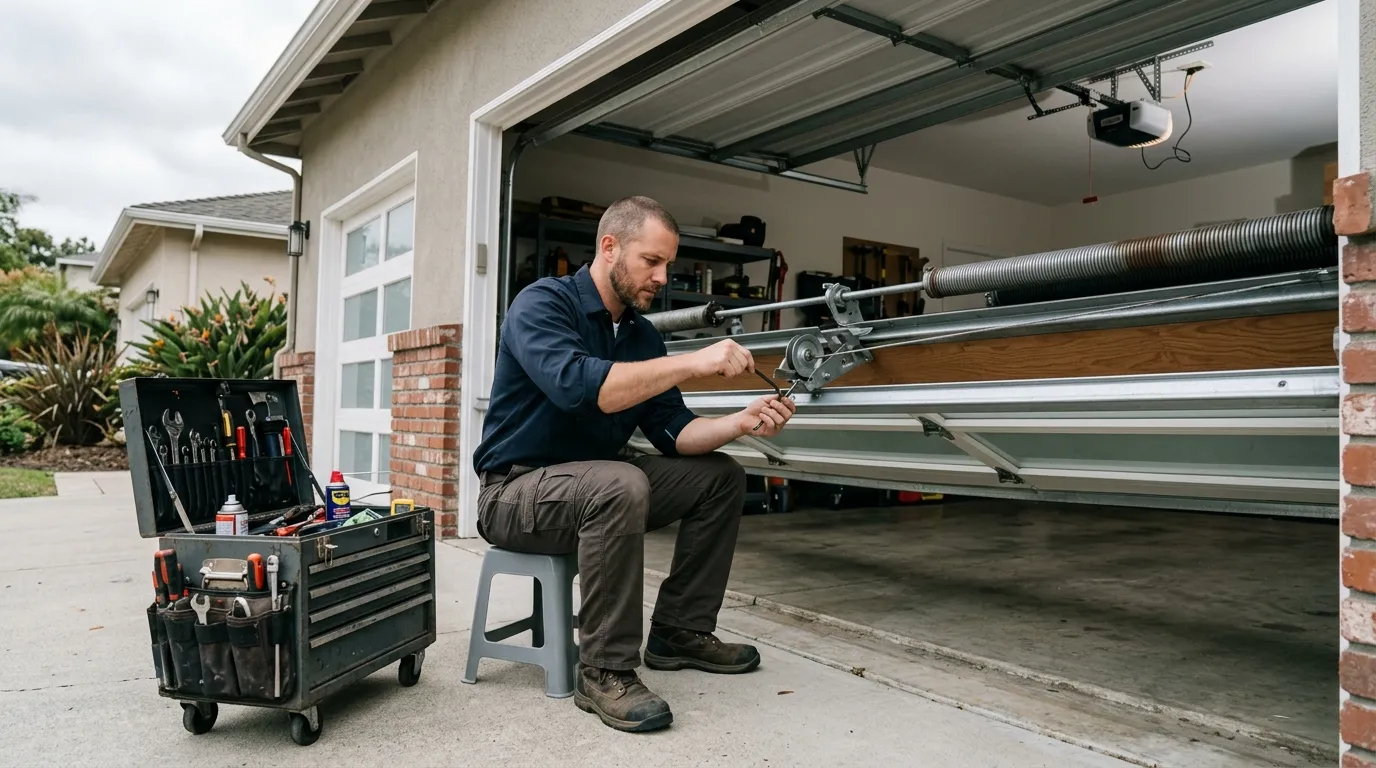
Most houses on this side of the metro went up between 1955 and 2004, with the median build year landing around 1975. Across the 19 named areas that make up this territory, the bulk of the stock is 1960s and 70s construction. That matters for openers because a unit installed on a house from that era has usually been replaced once, sometimes twice, and whatever's on the ceiling now is either an older chain-drive unit without battery backup or a newer belt-drive with one.
Rosemount sits in a cold, moderate climate band. That doesn't mean brutal extremes every year, but it does mean months of freeze-thaw cycling that puts real stress on gear sets, drive belts, and the plastic housings on circuit boards. Cold makes lubricant stiffen, chains sag differently than belts do, and logic boards that are already twelve or fifteen years old are the ones most likely to fail exactly when a cold front knocks out power for a few hours. The two problems - aging opener, seasonal power interruption - aren't separate issues here. They compound each other, and that's the piece a lot of general advice misses.
The most common mistake is assuming every opener has a battery backup that kicks in automatically when the power cuts. It doesn't. Battery backup became standard on newer belt-drive units, not on the chain-drive openers that are still running in a lot of houses built in the 1960s and 70s wave that makes up most of this area's stock. If your opener predates that feature, a power cut just means the door doesn't move until the power comes back, full stop - no automatic switch-over.
The second mistake is treating the manual release cord as an emergency-only thing you'll figure out on the spot. In a cold-moderate climate, doors get heavier in winter - grease thickens, weatherstripping grips harder - so pulling the release and lifting a 150-pound door by hand in January is a different job than doing it in July. People also tend to assume a dead opener means a dead board, when a lot of the time it's a tripped breaker or a loose wire nut at the wall switch, something a homeowner can actually check before calling anyone out.
If the opener has power at the outlet, the wall button lights up, and the door still won't move, that's usually a board or logic-circuit failure, and that's not a part you troubleshoot by trial and error - guessing wrong on a circuit board can fry a new one on install. That's a call-it-in job.
Same goes for anything involving the opener's connection to the door itself after a power event - if the door was mid-cycle when the power cut and the trolley disconnected from the carriage, reconnecting it wrong puts the full travel and force settings out of spec, and a door that slams down instead of settling is a safety problem, not an inconvenience.
We'll say plainly what we don't do: we don't rewire electrical panels or add whole-house backup circuits. If the power cuts are the bigger issue and not just the opener, that's an electrician's job, and we'll tell you that instead of pretending it's a garage door fix. We handle the opener and the door. We don't touch the panel.
This is a service area of roughly 49,691 households, with 26,390 of those in owner-occupied houses, most of them built in that 1955-2004 window with a median around 1975. Median household income here runs $93,233, which is part of why most owners in this area choose to replace an opener outright once it's failing rather than keep nursing a board that's been patched twice already - the cost math favors a new belt-drive unit with backup built in over another round of parts and labor on a fifteen-year-old chain-drive.
That's not a push toward unnecessary replacement. If your opener is five or six years old and it's a board issue, that's a repair, plain and simple. But if it's original to a house from the 1970s wave and it's already lost power twice this winter, the honest math usually points toward swapping it rather than keeping it alive one more season. We'll tell you which situation you're in before we quote anything.
Not automatically. Battery backup is standard on newer belt-drive units but wasn't common on the chain-drive openers still running in a lot of houses built in the 1960s and 70s stock that makes up most of this area. Check the housing for a battery compartment near the motor - if there isn't one, a power cut means the door won't move until power returns.
Cold thickens the grease on the tracks and rollers, and weatherstripping grips tighter against the frame, so the manual pull during a power cut takes more effort in January than in July. It's the climate here, not a sign your door's springs are failing, though it's worth having the balance checked if it feels unusually hard.
If the wall button lights up and the unit hums but the door doesn't move, that's usually a board failure or a disconnected trolley, not a simple fix you should guess at. Guessing wrong on a logic board can damage a replacement on install, so this is a call-it-in repair rather than a DIY one.
Call now or request a free quote - same-day service on most repairs, upfront written pricing.