Rosemount, MN · Garage Door Service
Serving Elko New Market from Rosemount, 18 miles out. Doors here date mostly to 2004, decades newer than the rest of our service area - the failures are different.
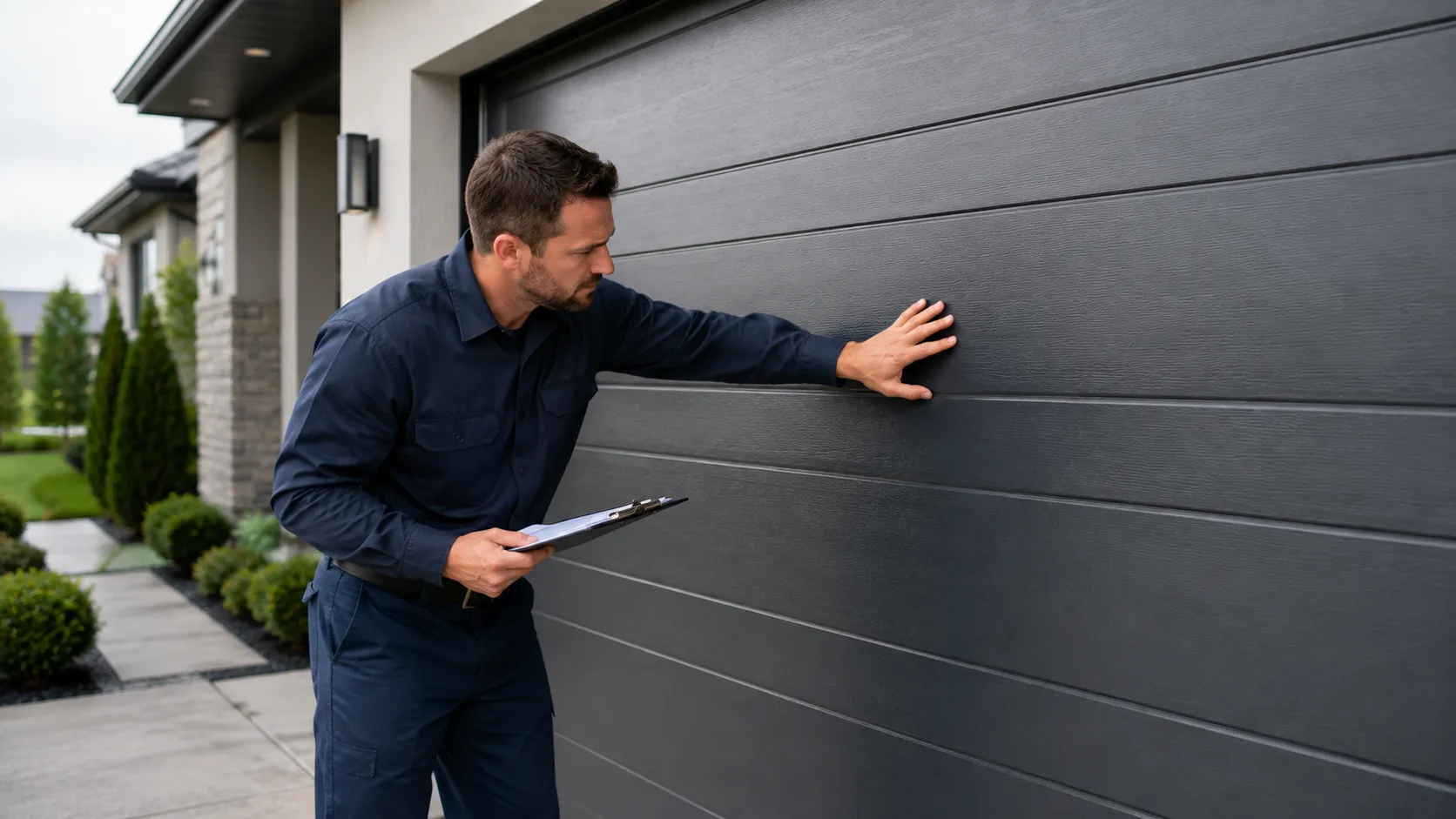
We don't keep a depot or a truck staged in Elko New Market. Every job here starts with an 18-mile run from Rosemount, so if you call for a same-hour fix during a busy stretch, we'll tell you the honest window instead of promising something we can't hit from that distance. We also don't stock every opener logic board or every spring wire gauge on the truck - some parts for doors built in the early 2000s aren't the same ones we pull for the older stock closer to Rosemount, and if yours is uncommon we may need a day to get it. If a door's cable, track, and opener are all failing at once on a 20-year-old install, we'll usually tell you straight that replacing the unit costs less over time than patching it three separate ways. We're not going to talk you into a repair that's just delaying the same call six months out.
What we will do is show up, look at what's actually on the wall, and quote the job for the door you have, not a generic one.
Elko New Market is younger than most of the towns we cover. The median year built here is 2004, while houses across the wider service area cluster more around 1975, with a lot of that stock going up in the 1960s and 70s. That twenty-nine-year gap matters more than it sounds like on paper - a door and opener installed in 2004 uses different spring wind, different roller material, and a different generation of opener electronics than a door from 1975.
Household income here also runs well above the broader service area, at $147,381 against a service-area median of $93,233, and with only about 1,578 households total, this is a smaller, newer, higher-income pocket rather than an older established block. That combination tends to mean fewer patched-together doors with mismatched replacement parts over the years, and more original builder-grade hardware that's now aging out all at once rather than piece by piece.
With a median build year of 2004, most of the original torsion springs in Elko New Market are now around 20 years old - right at the edge of a typical spring's cycle life, which is why we're seeing a run of first-time spring failures on doors that have otherwise never given the homeowner trouble. The openers from that era are also starting to show their age: circuit boards with early-2000s logic occasionally stop talking to newer remotes and keypads cleanly, which reads to homeowners as a broken opener when it's really just an aging board.
The service area sits in a cold, moderate climate band, and on a door this age the original weatherstripping and bottom seal have usually gone stiff or cracked, letting more cold air into the garage than the door was designed to block when it was new. We see less of the rust-through and rotted panel work here that shows up on the 1960s and 70s housing elsewhere in the area - the doors are simply too young for that kind of decay yet.
On a 2004-era door, the failure usually looks like one clean break rather than a slow decline. A torsion spring at 20 years old tends to snap rather than sag, so the call is often "the door won't budge and there's a loud bang," not a door that's been getting harder to lift for months. Rollers on these doors are often still original steel, not the sealed nylon rollers common on more recent installs, so a noisy track on a house here is frequently just worn steel rollers rather than anything structural.
On the opener side, the fix is sometimes as simple as a board swap rather than a full unit replacement, since the motor and drive on a well-built 2004 opener often still have life left even after the electronics start acting up. Given the cold-moderate climate here, we'll also check the bottom seal and weatherstripping on any service call, since a cracked seal on a 20-year-old door is an easy, low-cost fix that homeowners often don't know is available separately from a full door replacement.
No. We run out of Rosemount, about 18 miles away, and travel to Elko New Market for service calls. We don't stage a truck locally, so scheduling depends on the day's route rather than a fixed local response time.
Torsion springs are usually rated for a fixed number of open-close cycles, and most residential springs reach the end of that range somewhere around the 15-25 year mark depending on use. A house built in 2004 is right in that window now, which is why we're seeing a run of first-time spring failures on doors that never had trouble before.
Often the motor and drive on an early-2000s opener still work fine, and the problem is just an aging circuit board that's lost sync with newer remotes. We'll check the mechanical parts first - if those are solid, a board swap is usually cheaper than a full replacement.
Yes. The service area sits in a cold, moderate climate band, and even a well-built 2004 door will have original weatherstripping that's gone stiff or cracked by now. That lets in more cold air than the door was designed for, and it's a separate, low-cost fix from anything structural.
Call now or request a free quote - same-day service on most repairs, upfront written pricing.