Rosemount, MN · Garage Door Service
Coates homes date to the mid-1950s, older than the area's 1975 median, meaning different spring hardware. Rosemount Garage Door Pros serves 3-mile stretch.
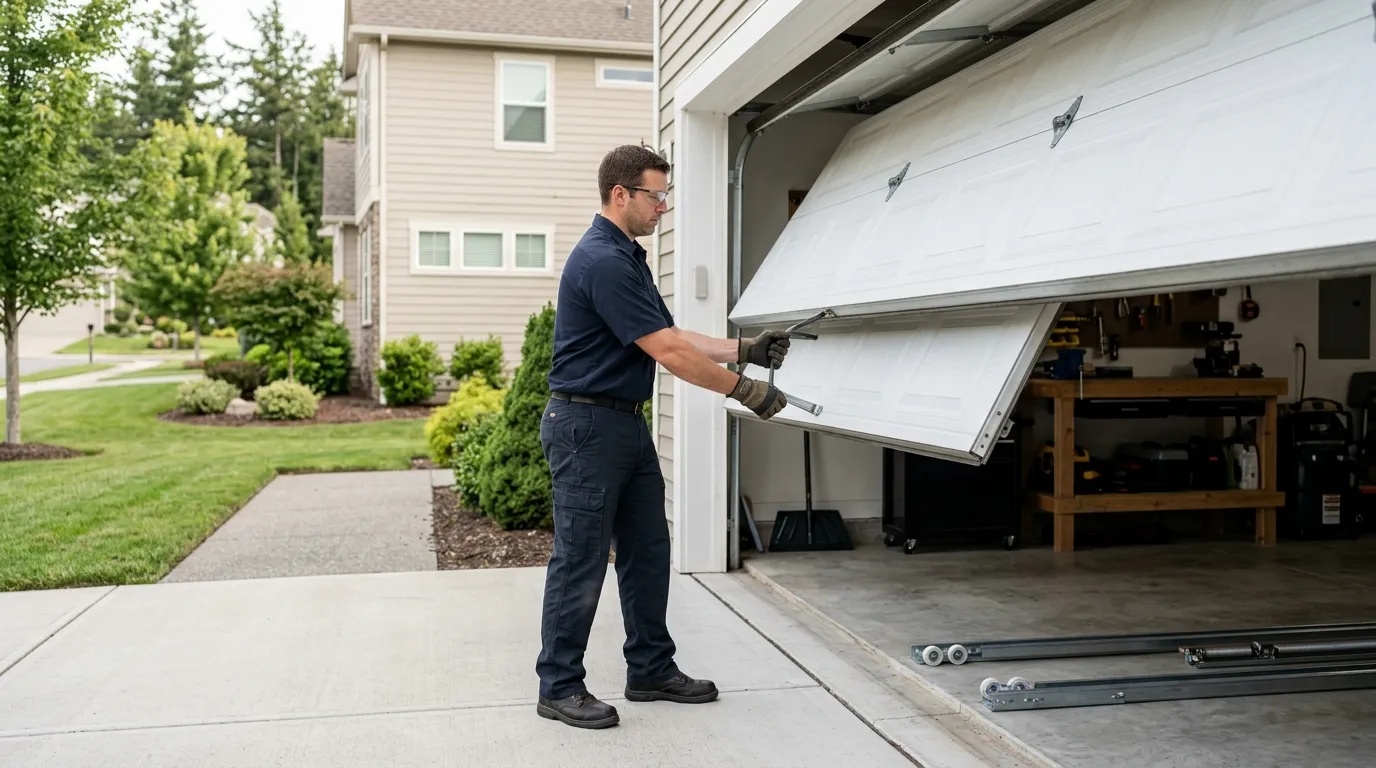
We don't keep a truck or a storefront in Coates. This is a 3-mile run from our Rosemount base, and we say that up front rather than imply a local depot that isn't there. We also don't push a full door replacement when a repair will hold - plenty of the original 1956-era doors in this area still have sound framing even when the spring or track hardware has failed, and swapping the whole unit just to sell a job isn't how we work.
What we won't do is promise parts on the shelf for every door out here. Some of the hardware on houses from the mid-1950s was discontinued decades ago, and if a torsion drum or a specific bracket has to be special-ordered, that's a wait we can't shorten. We'll tell you that before we quote the job, not after we've opened the header.
We also don't do cosmetic-only estimates over the phone for a door we haven't seen. On a stretch this small, with houses this old, too much depends on what's actually behind the trim.
Coates sits about 3 miles from Rosemount, and the housing here runs older than most of the wider service area. The median year built in Coates is 1956, well ahead of the broader area's 1975 median - this is one of the older pockets we cover, not one of the newer ones. It's also one of the smallest: around 49 households sit in this stretch, a fraction of the roughly 49,691 households across the full service area.
Median household income here runs about $79,583, below the area-wide figure of $93,233. That combination - older housing stock, a small household count, income below the broader median - tends to mean doors and openers that have been repaired piecemeal over the years rather than replaced outright. Fewer new builds also means fewer newer doors with factory-matched torsion springs and modern photo-eye safety sensors already wired in from the start.
The area sits in a cold, moderate climate band, same as the rest of the service territory, so the freeze-thaw cycle that stresses seals, rollers and cable ends applies here just as much as anywhere else we cover - it's the age of the door meeting that climate that makes Coates different.
Because so much of Coates dates to 1956, the calls we get here skew toward hardware that's original or close to it. A torsion spring installed on a house built in the mid-1950s has likely been replaced once or twice already by the time we see it, and the shaft and bearing plates underneath are often the original steel - pitted, sometimes bent slightly from decades of use.
We also see more extension-spring setups here than on newer doors elsewhere in the territory, since torsion conversions weren't standard practice on every build from that era. Extension springs age differently than torsion springs, and the safety cables that should run through them are the first thing we check, because a lot of older installs never had them added.
Cold-climate wear shows up the same way it does across the rest of the area we cover - brittle weatherstripping, rollers that have gone out of round, cables fraying at the drum - but on a door this old, those symptoms often arrive alongside a track that was sized for a narrower opening than modern doors use. That narrower stock is one more reason parts aren't always a same-day fix here.
On a 1956-built house, the garage door itself is rarely the original - steel doors that age don't usually survive 70 winters - but the track, jamb bracket spacing, and header clearance often are. That means a replacement door has to be matched to an opening that predates the standard sizes most manufacturers build to now, which is a different job than swapping a door on a house built in 1985.
Openers are almost always a later addition here, bolted onto a door and track that weren't designed with a motor in mind. We regularly find openers mismatched to the spring tension of the door they're lifting, which shortens the life of both. Fixing that means resetting spring tension to the actual door weight, not just replacing whatever failed last.
Given the smaller household count in Coates, we're not out here constantly, so if a spring lets go, don't wait on it - a broken torsion spring on an old shaft is a two-person, come-prepared job, not a Saturday-afternoon fix.
Usually not the door itself - steel and wood doors from the 1950s rarely last 70 years - but the track, header clearance, and opening width often are original to a house built around 1956. That's the part that makes replacement here different from a newer build.
No. We work out of Rosemount and travel the roughly 3 miles to Coates for jobs. We don't keep a separate depot or storefront in the area, and we won't claim otherwise.
Some hardware on houses built around 1956 was discontinued years ago. If a bracket or drum needs a special order rather than a stock part, that adds time we can't shorten - we'll flag it before quoting, not after.
Call now or request a free quote - same-day service on most repairs, upfront written pricing.