Rosemount, MN · Garage Door Service
Garage door repair and install for St. Paul Park homes, most built around 1970. Rosemount Garage Door Pros works on the era-specific hardware common on this side of town.
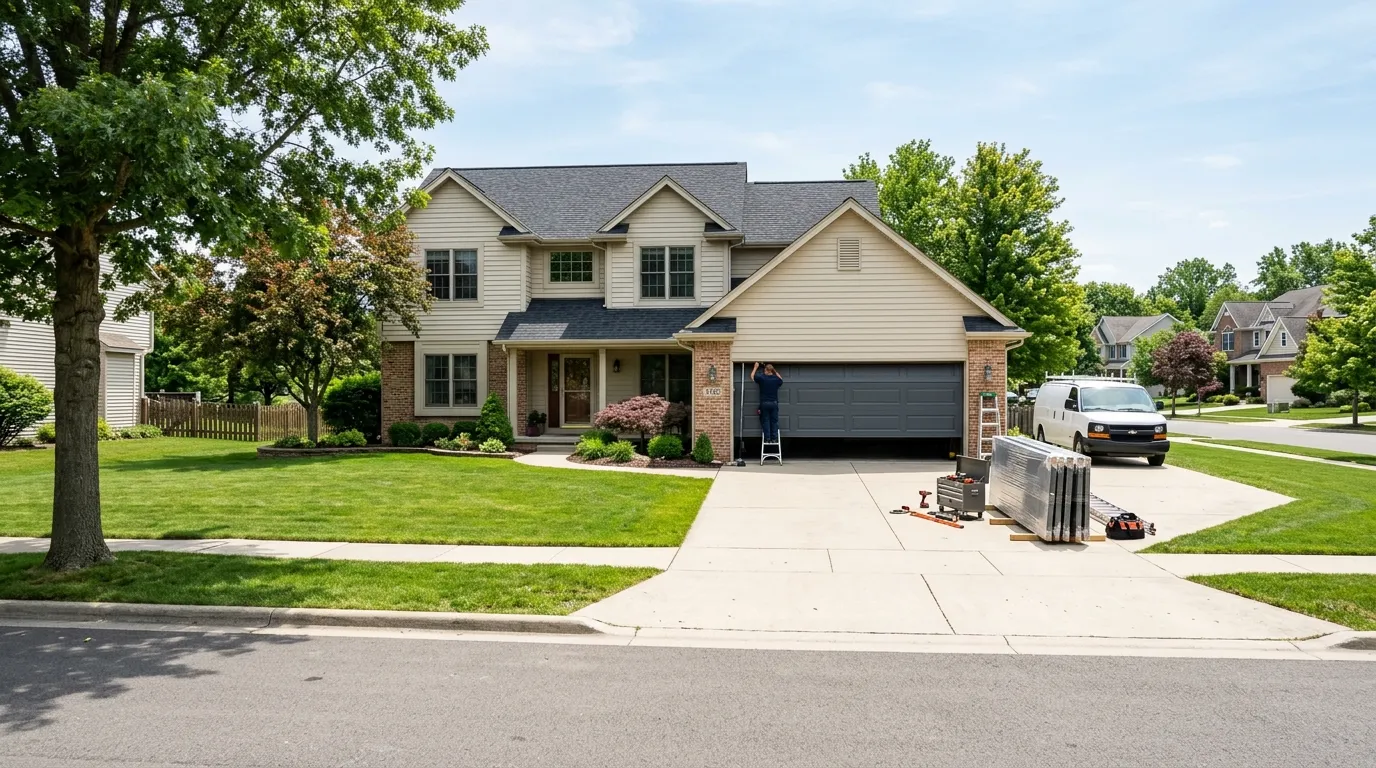
We don't keep a crew stationed in St. Paul Park. We run out of Rosemount, about 7 miles up the road, and we're upfront about that instead of pretending otherwise. If you need a same-hour fix for a car trapped inside during a storm, call around and ask who's actually closer - we'd rather you know that going in than have you wait on us out of a website claim. We also don't try to sell a full door replacement when a spring, a cable, or a bent roller will get you another decade out of the door you have. And we don't touch openers or doors we haven't seen in person first - quoting a repair sight unseen on hardware this old is how you end up paying twice. If your door is original to a house built in the early 1970s, we want eyes on the track and the hinges before we say what it needs.
St. Paul Park's housing skews a bit older than the wider Rosemount service area. Across the 19 communities we cover, the median build year lands around 1975, with most stock from the 1960s and 70s. St. Paul Park sits right in that window - the typical home here went up around 1970, which puts a lot of garages on original framing and, in many cases, original door hardware that's now over fifty years old. With about 2,216 households in the area and a median income near $98,670, this isn't a neighborhood of tear-downs and quick flips - a lot of these doors have been patched, not replaced, and they're still running the same torsion springs and lift cables they came with. That matters for parts. Some of the mounting hardware and track profiles from that era aren't what a big-box door ships with today, so a repair sometimes takes more measuring than a newer install would.
On doors from this build era, the calls we get are pretty consistent: torsion springs that have simply worn out from decades of cycles, worn rollers grinding in a track that's slightly out of square from age, and cables starting to fray at the drum. We're in a cold-moderate climate band, and on a garage this old, the door often wasn't insulated when it was built - panels sag or bow over the winter, and the extra load lands on hardware that's already tired. We also see openers that have been swapped once already, sometime in the 80s or 90s, bolted onto brackets meant for a lighter, older door - that mismatch shows up as strain on the opener motor long before the door itself fails. None of this is exotic work. It's the predictable wear pattern of a door that's been doing its job since around 1970, and it's usually fixable without a full teardown.
Because St. Paul Park's homes run a bit older than the area average, the failure you're likely to see isn't a modern opener sensor glitch - it's mechanical. A torsion spring on a door installed around 1970 has had roughly five decades of open-close cycles, and springs are rated for a number of cycles, not years, so age alone tells you it's due. Track alignment drifts on older framing as houses settle, which is why rollers that seemed fine last winter start binding this one. If your door still has its original one-piece panel and side-mounted hardware, replacement parts sometimes take longer to source than for a door installed in the last fifteen years - that's a real limitation, and we'll tell you upfront if a part needs ordering rather than promise a same-day fix we can't back up.
No. We work out of Rosemount, about 7 miles away, and travel to St. Paul Park for jobs. We don't claim a local depot or a guaranteed response window here - we'll give you an honest estimate on timing when you call, based on the day's schedule.
A torsion spring is rated for a set number of open-close cycles, not a set number of years. A door installed around 1970, which is typical for this area, has been cycling for decades. Once a spring nears the end of its cycle life, it fails without much warning - that's the pattern we see most on original hardware here.
Depends on the panel and the frame, not just the age. If the panel is solid and the track is square, replacing springs, cables, or rollers usually makes more sense than a full swap. If the frame has racked or the panel is delaminating, replacement is the better use of money. We'll tell you which one you're looking at.
Call now or request a free quote - same-day service on most repairs, upfront written pricing.