Rosemount, MN · Garage Door Service
Rosemount Garage Door Pros drives 19 miles to North St. Paul for torsion springs, openers, and panels on the early-1970s doors common to this pocket of the metro.
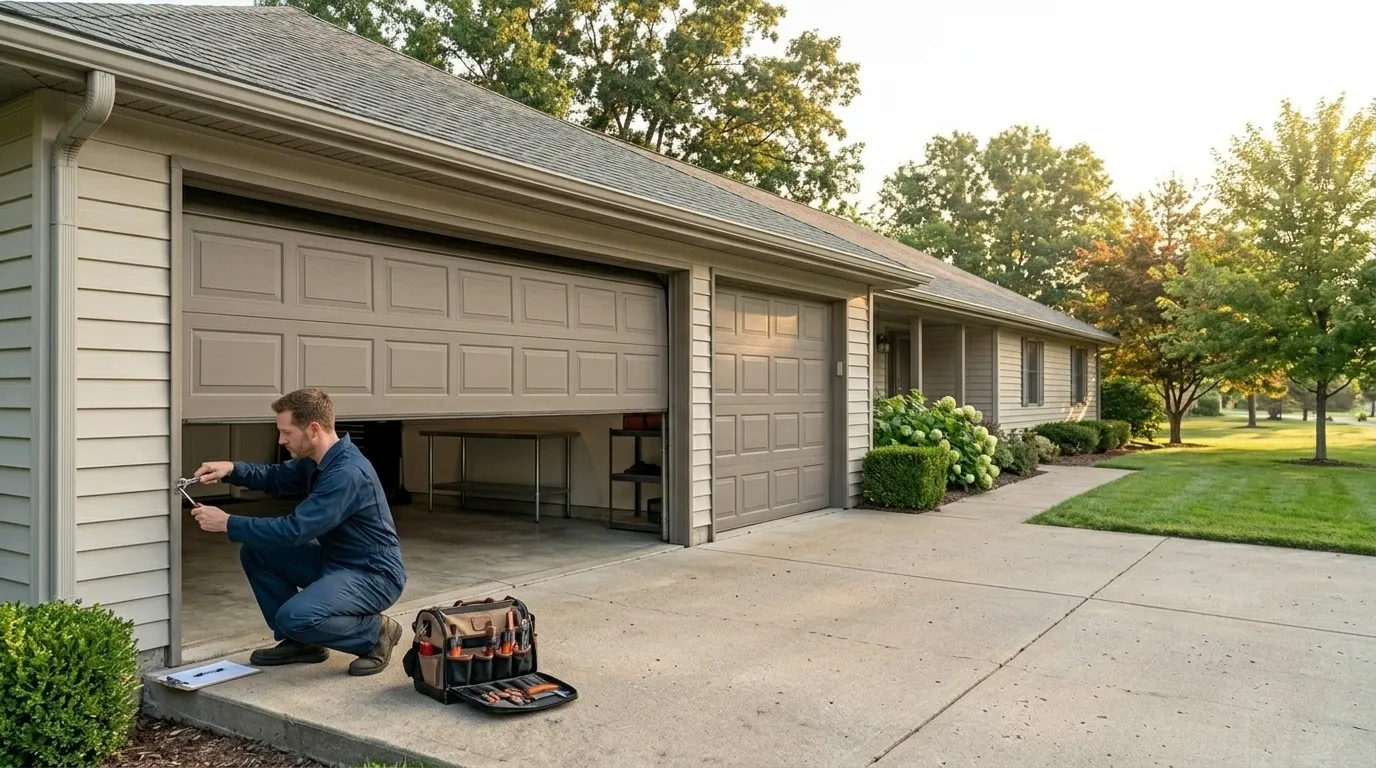
We don't keep a crew or a shop in North St. Paul. We run out of Rosemount, about 19 miles southwest, so we're not the ones to call for a same-hour walk-in or a door that's blocking a moving truck in the next ten minutes. If you need a depot on your street, we're not it. What we do is schedule the drive and show up with the right torsion spring, the right roller, the right opener board already in the truck, because we've priced the job over the phone first. We also don't try to sell a full door replacement when a bent track or a worn roller is the actual problem - if a $40 part fixes it, that's what goes on the invoice, not a new door. And we don't guess at spring wind or drum size sight unseen; if you can tell us the door's age and rough symptoms, we come prepared instead of making two trips.
The city-wide numbers for our service area put the median build year around 1975, but North St. Paul itself skews a little earlier and tighter - 1973 is the median here, with 4,684 households on the ground. That decade matters more than people think. A door built in the early-to-mid 1970s almost always came with steel torsion hardware, but the springs, end bearing plates, and cable drums from that era are undersized by today's standard, especially on wider two-car openings that got added or widened later. Median household income here runs $81,641, a step below the roughly $93,233 median across the wider 19-community area we cover - which tends to mean more owners holding onto original hardware and running it until it fails outright, rather than replacing on a schedule. Combined with our COLD climate band, that older steel spends every winter cycling through freeze-thaw stress it wasn't built for at today's usage rates.
On doors from this build era, the call is almost always one of three things: a torsion spring that's finally given out after years of running undersized, a cable that's frayed off a drum that's slightly too narrow for the door weight, or an opener from a later retrofit that's fighting hardware it was never matched to. We see a fair number of openers installed ten or fifteen years after the door itself, on brackets and rail that don't quite line up with what the original builder framed in. That mismatch shows up as grinding, as a door that reverses for no clear reason, or as a remote that only works from six feet away. None of that is exotic - it's what you get when 1970s carpentry meets a 2000s opener kit installed on a Saturday afternoon. We carry springs sized for the heavier, wider doors that replaced originals over the decades, not just the light springs that shipped with the house.
In practice, a homeowner here calls about a door that's suddenly heavy to lift by hand, or one where the opener strains and clicks off midway. Nine times out of ten that's the torsion spring finally letting go after four-plus decades of cold winters cycling the steel. The other common pattern is a door that shudders or drifts off-track partway through its travel - usually a roller or a track bracket that's loosened on original wood jamb framing, which was standard for houses going up here in the early 1970s and isn't as rigid as the steel-framed openings built later. We don't replace a whole track system when tightening the brackets and swapping a few rollers solves it. If the door itself is original from that build era, we'll say so plainly - sometimes a 50-year-old door is worth fixing once more, and sometimes the wood panels have had enough, and a new door is the honest answer.
No. We run out of Rosemount, about 19 miles away, and schedule North St. Paul jobs by appointment. We don't advertise a same-hour response here because we're driving in, not around the corner.
On a door from the early 1970s, that's usually the torsion spring wearing out after decades of winter cycling. Springs sized for houses of that era were often lighter than what a wider or heavier retrofit door needs, so they fail sooner than people expect.
It depends on the panels and the track, not just the age. If the steel or wood panels are sound and it's really a spring, cable, or roller issue, repair usually makes sense. If the panels are warped or cracked, replacement is the more honest call.
Call now or request a free quote - same-day service on most repairs, upfront written pricing.