Rosemount, MN · Garage Door Service
Garage door repair and replacement for Mendota Heights homes built mostly in the 1980s, served from Rosemount, 10 miles away. Springs, openers, panels, tracks.
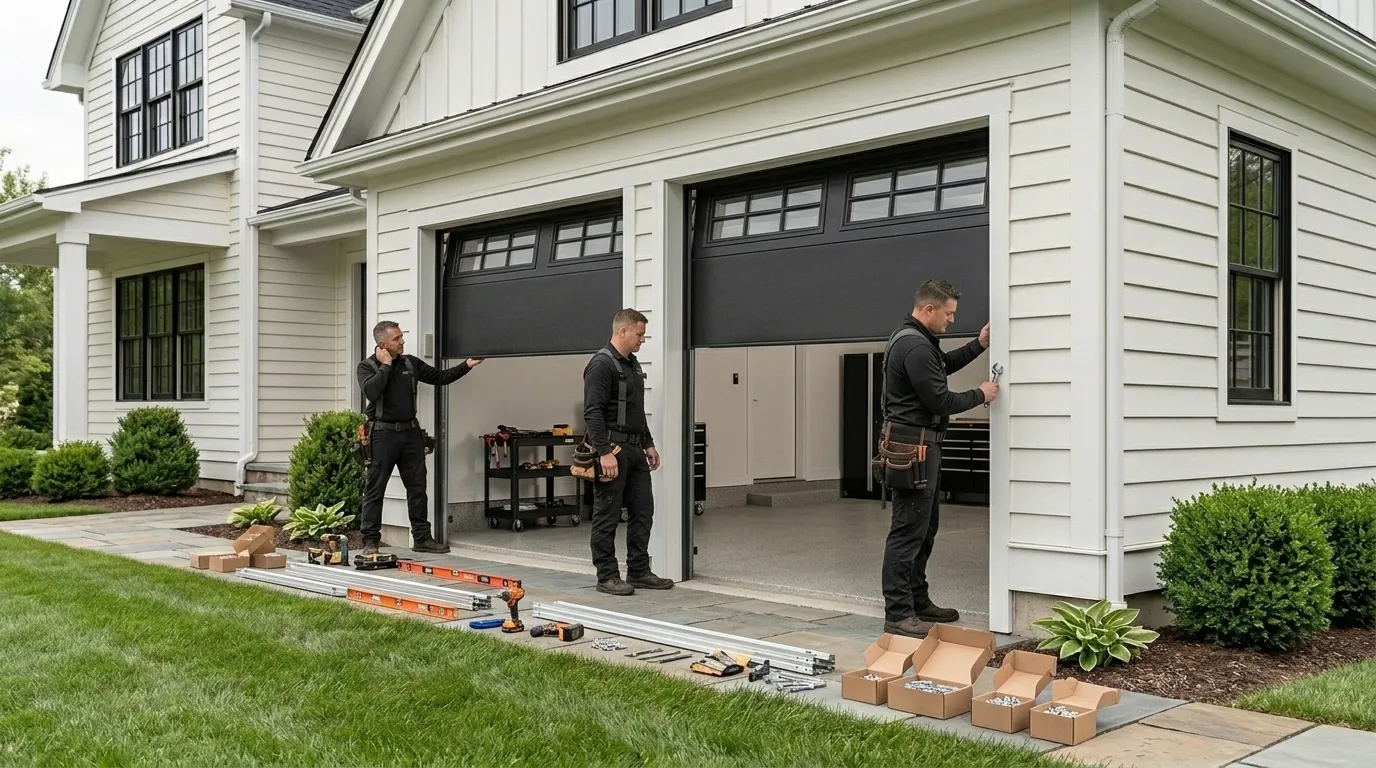
We don't keep a crew or a depot in Mendota Heights. We run out of Rosemount, about 10 miles away, and we're upfront about that because it matters for how you plan a call - same-city companies can sometimes get to you faster on a walk-in basis, and we're not going to pretend otherwise. What we also don't do is push a full door replacement when a spring, a roller set, or a bent track section will get you another decade out of the door you have. If a door is original to a mid-1980s build and the panels are sound, we say so. And we don't guess at parts on the phone - a torsion spring size, a jamb-mount bracket, an opener's drive type, these need eyes on the door before we quote anything real.We also won't tell you a same-day slot is guaranteed. Depending on the week and what parts a job needs, a repair might mean a return trip.
Mendota Heights runs newer than a lot of the towns around Rosemount. The median build year here lands around 1983, which puts most of the housing stock a good eight years past the 1975 median you see across the wider service area covered by F1. That gap matters more than it sounds like it should. A house from 1983 was very likely built with a section steel door on an extension-spring or early torsion setup, factory-primed and lighter-gauge than what went in during the 1990s and 2000s push. It also usually means the opener, if original, predates screw-drive and belt-drive designs that came standard later - a lot of these are still chain-drive units nearing or past their working life.With roughly 4,740 households in the area, this isn't a small pocket - it's a full generation of housing that shares the same door and hardware quirks. Compare that to the wider region's 1955-2004 build spread and you can see why a Mendota Heights call often looks different from a call ten minutes away in an older or newer subdivision.
On doors from this era, the failure we see most is the torsion spring sagging or snapping outright - the springs on 1980s-built garage doors are well past their rated cycle count by now, and most homeowners have never had them replaced once. Second most common: the original steel hinges and rollers, which were fine for their day but weren't galvanized the way later hardware is, so on a house this age in a cold-winter region they've usually pitted or seized at least once.Rosemount's service area sits in a cold, moderate climate band, and that means winter is doing steady, repeated damage to hardware and weatherseals rather than one dramatic event. On a house built in 1983, that's forty-plus winters of freeze-thaw cycling on the same springs, same cable ends, same bottom seal channel. Given the median household income here runs around $132,935 - noticeably higher than the wider area's $93,233 - we also get more calls asking about insulated replacement doors rather than patch repairs, which is a fair call on a door this old.
In practice, a call from a house built around 1983 usually starts with one of two things: a door that won't open because the spring let go, or an opener that's grinding, slow, or dead because the original unit is finally done. Panels on doors this age are usually intact - steel from the 1980s held up decently - but the weatherstrip at the bottom and the seal around the jambs is almost always cracked or gone, letting cold air straight into the garage through a Minnesota winter.We don't see much call for full-door replacement on structural grounds here; it's nearly always hardware and drive-train failure rather than the door itself falling apart. That's a genuinely different repair profile than what you'd find in a neighborhood built in the 2000s, where openers are newer and the first thing to go is usually a sensor or a cable rather than a forty-year-old spring.
No. We run out of Rosemount, about 10 miles away, and travel to Mendota Heights for calls. We don't keep a depot or standing crew in town, so plan your call knowing the drive is part of the timeline.
Most homes here were built around 1983, and the original torsion or extension springs are well past their rated cycle life by now. Combined with decades of Minnesota winter freeze-thaw on the hardware, spring failure is the single most common call we get from this area.
On most 1980s-built doors here, the steel panels are still sound and only the spring, hardware, or weatherseal needs work. We only recommend full replacement when the door itself is warped, rusted through, or the repair cost approaches replacement cost.
Call now or request a free quote - same-day service on most repairs, upfront written pricing.