Rosemount, MN · Garage Door Service
Garage doors on Rosemount's 1960s-70s houses often need panel replacement, not full doors. Learn why panels crack here and how booking a job actually works.
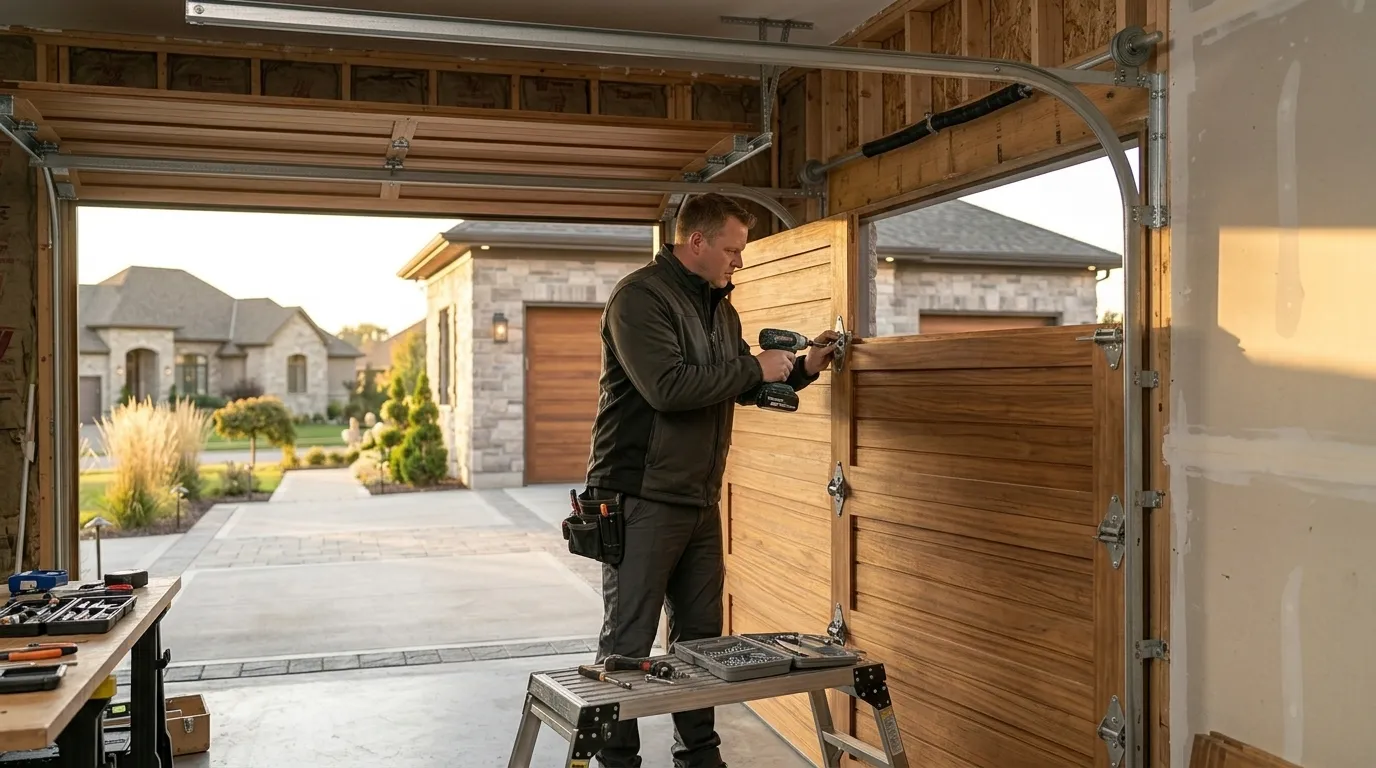
You back into it, a hailstone dents it, or one section just starts flaking rust from the inside out while the rest of the door still runs fine on its track. That's the panel problem - one section of a sectional door failing while the springs, opener, and rollers underneath are still good. Homeowners usually notice it as a dent that won't pop back, a crack along a seam after a cold snap, or a section that's visibly bowed compared to the ones above and below it.
The tell that it's a panel job and not a full-door job: the door still opens and closes on its track without binding, the opener still lifts it without straining, and the damage is confined to one or two sections rather than spread across the whole door. If the track is bent or the door is racking sideways as it travels, that's a different repair, and we'll tell you that on the first look rather than sell you a panel swap that won't fix it.
This page covers panel replacement specifically - matching, ordering, and swapping a damaged section on a door that's otherwise sound. If your issue is a broken spring, a dead opener, or a door that's off its track entirely, that's a separate call.
Rosemount's service area sits mostly on housing built between 1955 and 2004, with the median home going up around 1975, and the bulk of it concentrated in that 1960s-70s wave across the 19 communities we cover. Doors installed on those houses, or replaced once already since, are commonly steel sectional units from an era before foam-injected cores were the default. That construction dents easier and doesn't spring back the way a modern insulated panel does.
The cold moderate climate band this area sits in matters too. Steel contracts in a hard freeze, and a panel that already has a hairline crack or a soft spot from old rust will often split clean along that line during the first real cold stretch of the year. That's why we see a jump in panel calls once temperatures swing hard, not because the door is old exactly, but because it's already carrying stress that the cold finishes off.
The practical result: a lot of the doors we're asked to fix a panel on were never built to the specs you'd get buying new today, which means the replacement section has to be sourced to match an older door, not just picked off a shelf. That sourcing step is the part that actually determines how fast we can get you booked.
The first thing we need from you is the door's brand and, if you can find it, the model or panel design stamped on the inside of the frame or on a label near the bottom section. That tells us whether we're ordering a stock panel or a special order, and it's the single biggest factor in how fast the job moves.
We'll ask for the width and height of the door, how many sections it has, and which section is damaged - top, second, third, or bottom, since exposure and wear differ by position. A few photos taken straight-on and from an angle, showing the whole door and a close-up of the damage, let us confirm the match before a truck ever leaves.
Once we've got a panel confirmed and in hand, the swap itself is a same-visit job in most cases - unbolt the damaged section, transfer hardware where it can be reused, set the new panel, and run the door through a full cycle to check for binding. What we can't do is promise a same-day fix if your door is an older or less common design and the panel has to be special-ordered; that's the one part of this job that's out of our hands once the order's placed.
We don't have a fixed price to quote here, because panel replacement cost depends almost entirely on what's being matched - a common residential steel panel is a very different order than a discontinued design off an older 1970s-era door, and we won't guess at that number until we've seen the door or your photos.
What we can tell you is how the decision usually shakes out. With 26,390 owner-occupied houses across our service area and median household income here at $93,233, most owners we talk to want the repair that actually pencils out, not the flashiest fix. For a lot of houses, replacing one or two panels on an otherwise sound door costs less than a full door swap. But if the panel design is hard to source, or the door's old enough that finding a match means paying a premium for something obsolete, buying a new door outright can end up cheaper than chasing a single old panel. We'll tell you honestly which side of that line your door falls on before you commit to anything.
Usually, yes, if the rest of the door is sound and we can source a matching panel by brand and model. Houses in this area built through the 1960s-70s wave sometimes have designs that need a special order rather than a stock panel, which adds time but doesn't rule out the repair.
Steel panels contract in a hard freeze, and a section with an existing dent, rust spot, or hairline stress crack will often fail along that weak point once temperatures drop hard. It's less about the door's age on its own and more about a weak spot finally giving way.
If the door still travels smoothly on its track, the opener isn't straining, and the damage is limited to one or two sections, it's likely a panel job. Binding, racking, or a door that won't stay on track points to a track or spring issue instead.
Sometimes. If your door is an older or discontinued design, sourcing a single matching panel can cost more than expected. In those cases a full door replacement can come out ahead, and we'll walk you through both numbers before you decide.
By Neighborhood
We also handle panel replacement in these Rosemount-area suburbs.
Call now or request a free quote - same-day service on most repairs, upfront written pricing.