Rosemount, MN · Garage Door Service
Mendota Heights homes date mostly to the early 1980s - steel sectional doors with faded factory colors. We match panels, driving from Rosemount, 10 miles away.
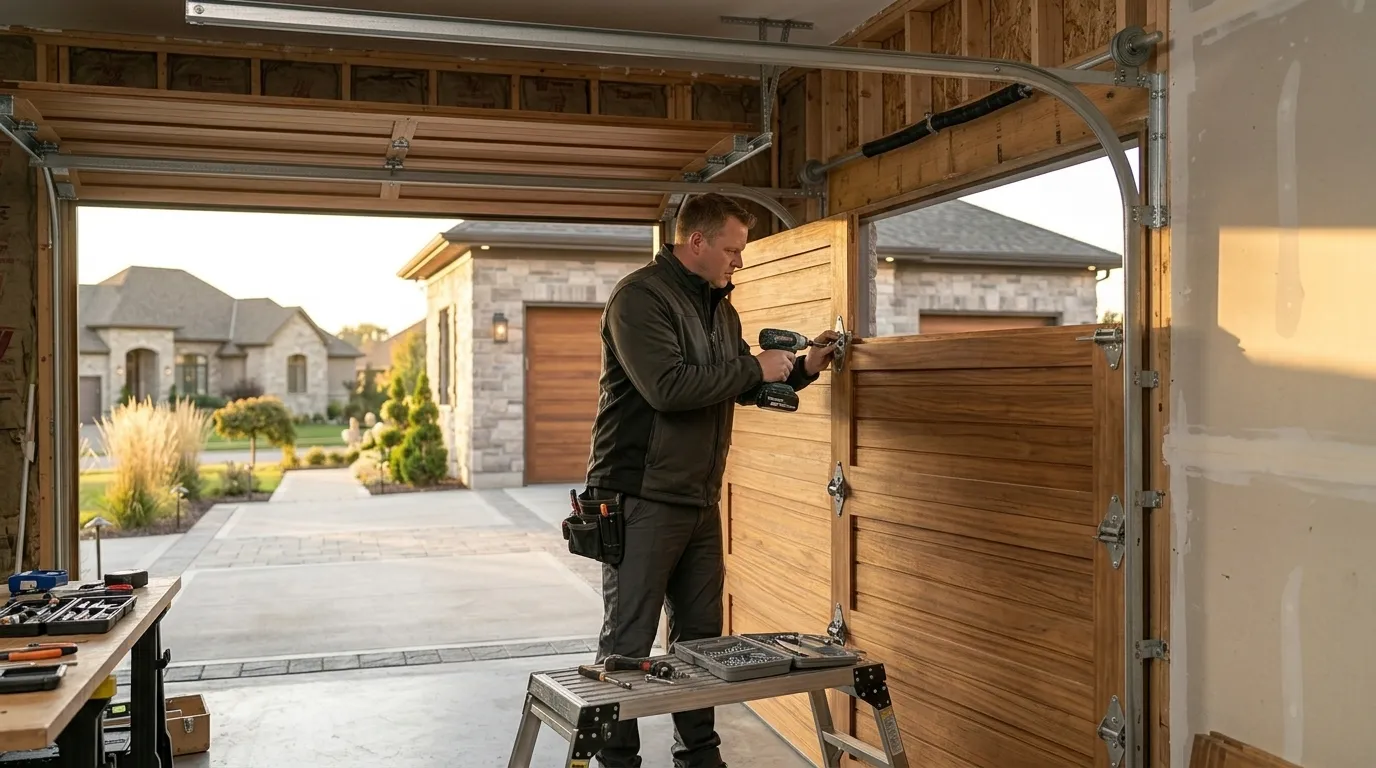
Mendota Heights runs about 4,740 households, smaller than a lot of the areas we cover out of Rosemount. That size matters for panel work: fewer identical builder-grade doors going up in the same subdivision year, more one-off replacements ordered years apart on doors nobody else on the block has. Homes here also skew newer than the service area's overall spread - the typical build lands around 1983, inside a service area where housing ranges from 1955 to 2004 with a 1975 median. That puts a lot of Mendota Heights doors in the steel sectional era, not the older wood or single-piece doors we see in the oldest stock elsewhere. The failure mode is usually the same regardless of age: a car backs into the bottom panel, a ladder dents the third section up, or years of sun bake the color coat until the replacement panel we order doesn't match the three panels still in good shape. On a door pushing 40 years, that mismatch is close to guaranteed. We tell people that up front instead of pretending a spot match will look invisible.
First we pull the door's model plate if it's still legible and check the panel dimensions and profile against what's currently manufactured. A lot of early-1980s steel doors used panel heights and rib patterns that got phased out, so the replacement panel might be a close structural match but a different embossment. Where that's the case we're honest about it rather than installing something that looks obviously bolted on. Color is the harder problem - factory baked-on finishes from that era have almost certainly been discontinued, so we're matching by eye against a current palette, not pulling an exact code. Some owners are fine with a near match on a back-facing door; others decide the mismatch bothers them enough that replacing all the panels, or the whole door, makes more sense than living with a patchwork. We'll give you both prices and let you make that call - we don't push the bigger job just because it's the bigger job. If the springs, cables, or hinges show wear while we've got the door apart, we'll flag that too, since it's a bad use of a panel job to leave a worn spring next to a brand-new section.
We're coming from Rosemount, about 10 miles out, so the trip itself isn't the variable - parts availability is. If your panel is a common size in a current finish, we can often turn the job around fast once we've confirmed the match. If it's a discontinued color or an older embossment pattern, sourcing the closest replacement panel can add real time to the schedule, and that's outside our control once the order's placed. We won't quote you a firm turnaround before we've actually looked at the door and matched it against what's in stock, because guessing on that just sets up a broken promise. Cold-weather stretches also slow install scheduling somewhat, since a freeze-thaw cycle common to this part of the state can make panels stiffer to seat and seal properly, and we're not going to rush that part to hit an arbitrary date. What we can tell you honestly: a straightforward single-panel swap on a standard size door is a same-visit job once the part's in hand. A full-door repanel because the colors won't match is a bigger project, and we'll say so before we start.
We carry the measuring and diagnostic tools needed to confirm panel dimensions, track spacing, and hinge pattern on site, plus a range of current-catalog panel sizes and finishes that cover most sectional doors going up today. What we don't carry is a warehouse of discontinued 1980s color runs - that's simply not something any truck stocks, and we won't pretend otherwise. If your door needs an exact vintage match, that's a special order, and we'll tell you the honest tradeoff between waiting on that order versus accepting a close modern equivalent. We also bring the hardware that tends to fail alongside a damaged panel - rollers, end hinges, occasional cable - since a panel replacement is a reasonable time to deal with those rather than opening the door back up in six months. What we won't do is sell a full new door on a panel call just because it's a bigger ticket; if a patch or single-panel swap solves the actual problem, that's what we'll recommend.
On a door from the early 1980s, probably not exactly. Factory finishes from that era are largely discontinued, so we match against the closest current color available. Some owners accept the near match, especially on a side or rear-facing door; others opt to replace all panels or the full door once they see how noticeable the difference is.
About 10 miles. We don't keep a branch or depot in Mendota Heights - every job is dispatched from Rosemount, so factor that into scheduling rather than expecting a same-hour arrival.
Depends on the age and condition of the rest of the door. A single panel swap costs less up front but can leave a visible color mismatch on an older steel door. We price both options before starting so you're deciding with real numbers, not guessing.
It can. This area sits in a cold, moderate climate band, and steel panels get stiffer to seat and seal properly during freeze-thaw stretches. We don't rush that step just to hit a schedule, since a poorly seated panel undoes the point of replacing it.
Call now or request a free quote - same-day service on most repairs, upfront written pricing.