Rosemount, MN · Garage Door Service
Lake Elmo garage doors date mostly to the early 2000s, so insulated steel panels split at foam seams, not rust. We replace single panels, not the whole door.
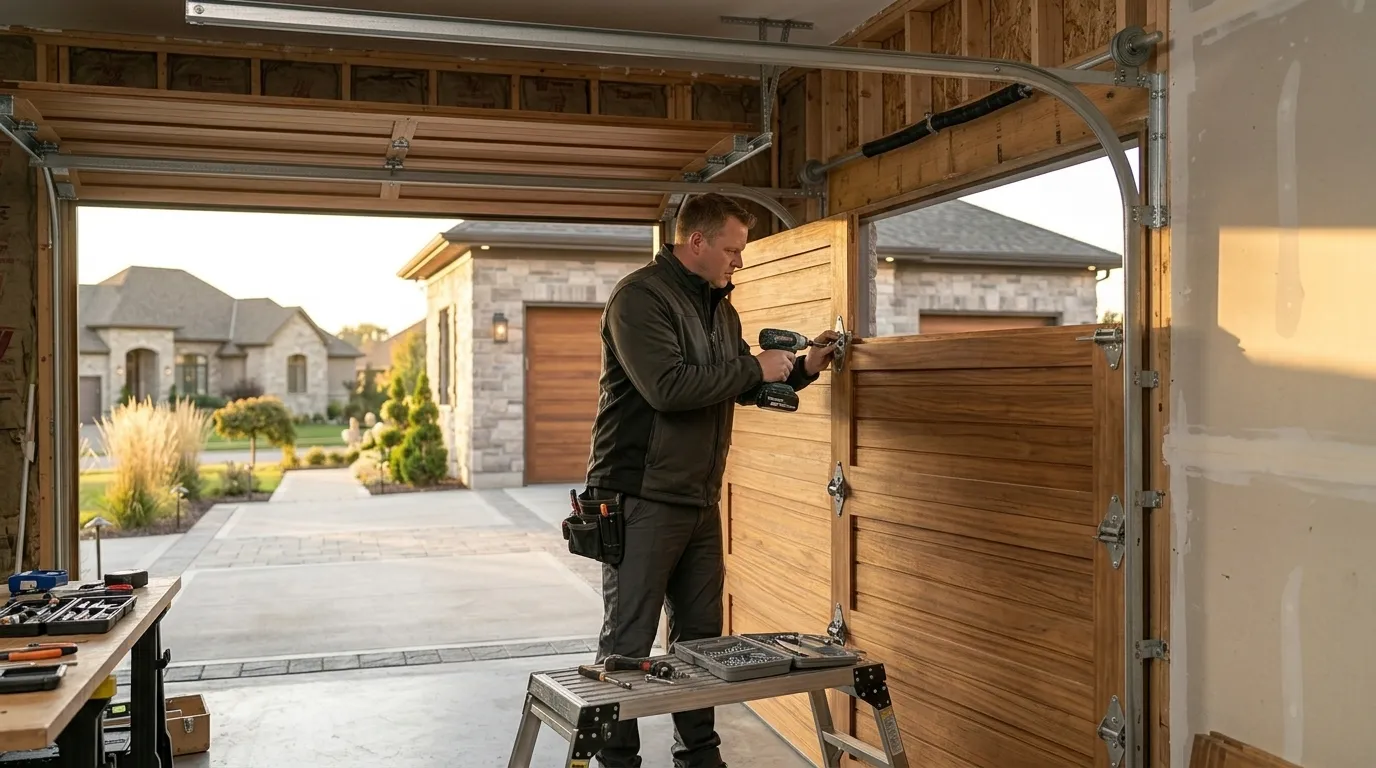
Most of what we carry for Lake Elmo jobs is standard steel panel stock in the sizes and colors that show up on builder-grade doors from the early 2000s - that's when most of this town's housing went up, well after the older stock closer to Rosemount. That means we're usually matching a factory steel skin with a foam core, not patching a 1970s embossed panel or a wood carriage door.
The honest limit here: a panel that's twenty-plus years old has faded. Even a correct-model replacement panel will look a shade off next to sun-worn neighbors until the whole door weathers evenly, and if the original profile has been discontinued we can't manufacture a match - at that point replacing the full door is the straighter answer than chasing a panel that doesn't exist anymore. We bring torsion tools, panel clips, and end-hardware for insulated sectional doors, since that's what this town's door stock calls for far more than the older single-layer steel common elsewhere in the area.
We run out of Rosemount, and Lake Elmo is about 18 miles out - there's no branch or drop point here, so a job means one truck making the trip with the panel already identified. That's why we ask for the door's brand, panel size, and a photo of the damage before we load the truck. Guessing at a panel on-site and driving back for the right one wastes your afternoon and ours.
If you know the manufacturer sticker location (usually on the door's inside frame or on the last panel installed) that one detail saves a second trip more often than anything else we ask for.
The complaint we hear most from this side of the service area isn't a door that won't open - it's a bottom or middle panel that's bowed outward, with the seam between it and its neighbor visibly separated. That's the foam core failing inside an insulated steel skin, and it's a different fault than the dented, uninsulated single-sheet steel we see on older doors closer to Rosemount.
Sometimes it shows up as a panel that rattles independently of the rest of the door when it travels, or a section that no longer sits flush when the door's closed and latched. If the track is dragging or the door binds only at one panel, that's usually the delaminated section catching on the roller, not a spring or opener problem.
A homeowner can usually spot which panel has failed and can often pull the trim screws on a bottom panel without our help. What we don't recommend touching is anything that means disconnecting the torsion spring or taking tension off a cable to swap a middle or top panel - that's where hands get hurt, and it's not a job that forgives a mistake.
If the fix is a scuffed bottom panel from a car bumper, ordering the part and bolting it in is within reach for someone comfortable with basic tools. If the failure is the foam-core seam splitting we described above, that's usually a factory defect in the panel itself, not something a replacement bolt-on part fixes - and it's worth a call before you order parts that won't solve it.
Lake Elmo's housing stock is newer than most of what we cover - the area's median build year runs around 2002, well past the 1975 median across the wider service territory. That later build date means steel sectional doors with foam-injected cores, not the older uninsulated steel or wood doors that dominate closer to Rosemount, and it's the foam core seam, not the steel skin, that tends to fail first.
Income here also runs high - median household income sits around $153,407, against $93,233 across the rest of the area we serve - and that shows up in the door stock too: more insulated carriage-style steel doors with heavier panel sections, fewer bare economy doors. In a moderate-cold climate, that foam bond is what takes the seasonal expansion and contraction, and after enough winters it's the seam that gives, not the metal.
That's the foam core separating from the steel skin, common in insulated doors from this build era. The door can still travel on its track even with a bowed panel, but the seam gap usually gets worse, not better, and it's easier to fix with one panel now than a full door later.
We stock standard steel panel colors, but doors over fifteen years old have usually faded from sun exposure. A new panel will likely look slightly different from its neighbors until the whole door weathers. If the exact profile is discontinued, replacing the whole door is the more honest fix.
No - we run out of Rosemount, about 18 miles away. We schedule Lake Elmo panel jobs after confirming the door brand and panel size ahead of time, so the trip covers the actual repair rather than a first look.
That depends on whether your panel's profile is still made and how many other panels are showing the same foam-seam wear. If it's an isolated panel, a single swap is the cheaper route. If two or more panels are splitting, a full door often makes more sense long-term.
Call now or request a free quote - same-day service on most repairs, upfront written pricing.