Rosemount, MN · Garage Door Service
Panel replacement for Hastings homes built mostly in the 1980s. Rosemount Garage Door Pros drives the 11 miles out to match steel sectional panels correctly.
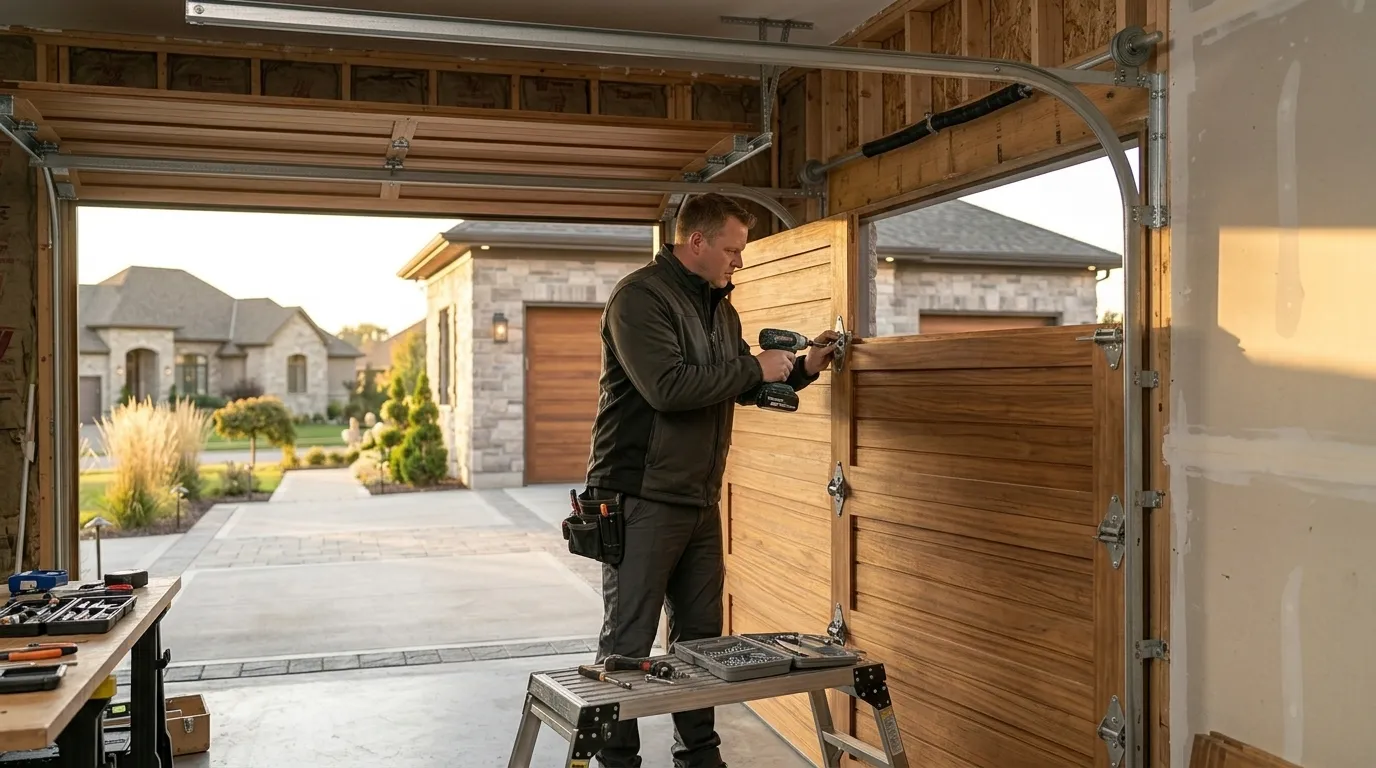
Hastings sits about 11 miles from our shop in Rosemount, which is far enough that we build the trip into how we quote the job, not just how we schedule it. A panel swap isn't a five-minute errand: we need to see the damaged section in person before we order anything, because sectional door panels have to match the existing run in width, rib pattern, and window cutout if the door has one. That means a first visit to measure and photograph, then a second visit to install once the panel is in hand. We don't pad the estimate to cover the drive, but we also don't pretend the trip doesn't happen - if you're on a tight morning window, say so when you call and we'll plan the route accordingly. Two visits sounds like a lot until you consider the alternative: ordering a panel sight-unseen and finding out it's a quarter-inch off on-site, which happens more than you'd think with doors that have been repainted or swapped once already. For Hastings specifically, the extra care matters because a lot of the sectional doors we see here are from the same handful of manufacturers that supplied builders through the 80s and 90s, and panel profiles from that era aren't all still in production.
Hastings homes run newer than the broader service area on average - the local build year lands around 1985, later than the 1975 median we see across the rest of the territory. That matters for panel work because doors from the mid-80s onward are mostly steel sectional units with foam or polystyrene cores, not the older wood or single-panel doors we deal with in the oldest pockets of the area. Steel sectional panels replace section by section: we unbolt the damaged section from the hinges and rollers on either side, slide the new section into the track, and re-hang the hinges without touching the rest of the door. The torsion spring almost never needs adjustment for a straight panel swap, which keeps the job contained. Where it gets harder is color and texture match - a panel that's sat in Minnesota sun and winter salt spray for fifteen or twenty years has faded and the new section won't match until it weathers too. We'll tell you that up front rather than let you find out at the reveal. If the door is old enough that the manufacturer has discontinued the exact profile, full replacement is usually cheaper than a custom panel order, and we'll say so instead of pushing a special-order part that takes weeks and costs more than a new door.
We stock common steel panel widths and standard hinge and roller hardware that fits most sectional doors built from the 1970s through today, which covers the bulk of what we see across the area including Hastings. What we don't carry are exact color and embossing matches for every builder-grade door from the 80s - those get special-ordered once we've confirmed the section and brand on-site. That's the honest limit: if your panel is a common width in white or almond, we can often turn the job around fast; if it's a discontinued woodgrain pattern or an odd width from a builder who's since gone out of business, expect a longer wait on the part itself, not on us. Given that our winters here run cold - it's a moderate-cold climate zone across this whole service area - we also carry weatherstripping and bottom seals on the truck, since a panel swap is a good time to check whether the section next to it has a gap that's been letting cold air and snow blow-through into the garage all season. We'd rather fix that in the same visit than have you call again in January.
The panel jobs we get called out for in Hastings usually start one of two ways: a dented section from a car bumper or a dropped ladder, or a cracked and buckled panel from a door that got forced closed while something - a bike, a trash can - was still in the track. Cracking shows up more on doors with foam-core steel panels once the core starts to separate from the skin, which happens gradually and shows as a slight bow or oil-canning look on the panel face before it actually splits. If you're seeing that bow, it's worth having it looked at before it worsens into a full crack, since a bowed panel can bind against the rollers and put extra load on the opener. Rust bleeding through at the bottom panel is the other one we see, more often on doors close to grade where snowmelt and salt sit against the steel over a Minnesota winter. None of these are emergencies in the way a snapped spring is - the door usually still opens and closes - but they don't improve on their own, and a panel that's structurally compromised puts uneven weight on the spring system over time.
Not always. A new panel is factory fresh and the rest of your door has years of sun and weather on it, so there's usually some visible difference right after install. It fades in over a season or two. If exact match matters to you now, full door replacement is the only way to guarantee it.
We stock common steel panel widths and standard hardware that cover most sectional doors from that era. Exact profile and embossing match for a specific builder-grade door often has to be special-ordered once we confirm the brand on-site, which can add lead time.
We don't quote response times without seeing the job first, since panel work usually takes an initial measure visit before we can order the part. Call and tell us what you're seeing and we'll talk through timing for your specific situation.
Usually not in the way a broken spring or snapped cable is - the door typically still runs. But a cracked or bowed panel puts uneven stress on the spring system over time and won't heal itself, so it's worth scheduling rather than ignoring through a winter.
Call now or request a free quote - same-day service on most repairs, upfront written pricing.