Rosemount, MN · Garage Door Service
South St. Paul homes mostly date to 1957, older than the rest of the Rosemount service area. New door installs here need to match that original opening and hardware.
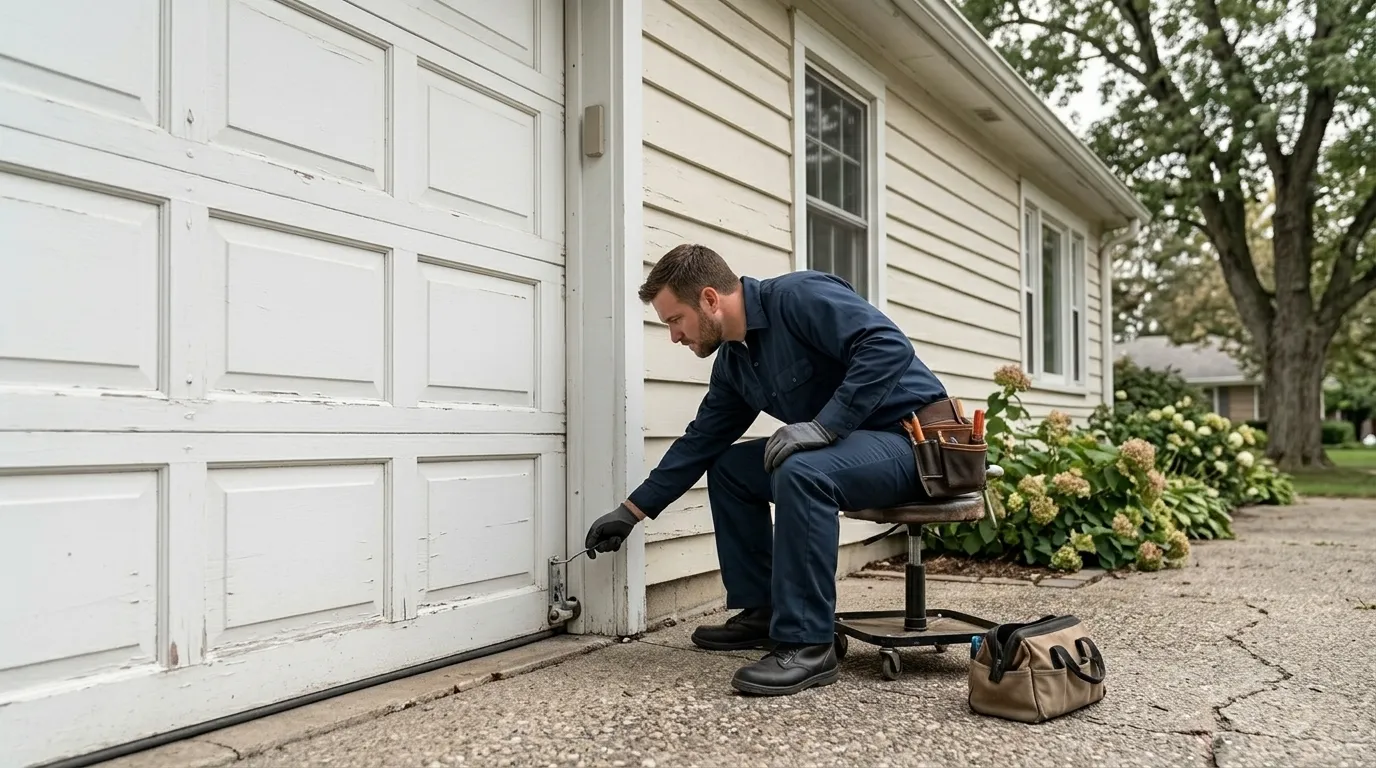
The call we get most from South St. Paul isn't a door that won't open. It's a door that opens fine but binds, scrapes, or drops the last six inches on its own. That's a track and roller problem, and it shows up here more than in newer parts of the service area because the openings themselves are older.
South St. Paul's housing stock runs older than the typical build across the wider area we cover from Rosemount - the median home here dates to 1957, well ahead of the 1975 median for the service area as a whole. A door that's been swapped once or twice since a 1957 opening was framed often sits in a rough opening that was never square to begin with, or has been shimmed and re-shimmed by whoever did the last replacement. New track has to be set to what the opening actually is now, not what a stock kit assumes it should be.
Single-car openings from that era are also narrower than what most manufacturers ship as their base width today, which matters when you're picking a door, not just installing one.
A straightforward two-car replacement on a squared, standard opening runs a predictable day. South St. Paul jobs run longer than that baseline more often than not, because a 1957 opening needs the jamb and header checked before anything gets hung - you don't skip that step on a house this age and expect the door to seal or track right afterward.
We budget extra time for framing correction on this kind of stock. It's not extra cost for the sake of it; it's the difference between a door that lasts and one that's fighting its opening from day one. If the jamb's rotted past the point of a shim fix, that's a conversation before we order the door, not after.
The most common mistake on a house this age is ordering the door before checking the header height. Original 1950s openings sometimes have less clearance above the door than current spring and track hardware wants, especially with an insulated door that's thicker than the single-layer steel or wood door it's replacing. If nobody measures that first, the door shows up and the track has to be re-engineered on site, which costs a return trip.
The other place this goes wrong is the opener bracket. Older framing sometimes doesn't have solid backing where a modern opener rail wants to mount, and cold-climate builds in this area mean that backing has usually taken decades of freeze-thaw movement. We check it before the opener goes up, not after it's already bolted in place and pulling loose.
Household incomes in the wider service area run a median of $93,233, which is enough that most owners here choose an insulated steel door over a bare single-layer replacement - worth knowing going in, since that decision changes both the header clearance question and the spring weight calculation before the door ever gets ordered.
Swapping the door itself - the panels - isn't the hard part, and a reasonably handy owner can do it on a newer, square opening. What we don't recommend doing yourself on a South St. Paul house from this era is re-squaring a 1957 opening or resetting torsion spring tension on hardware that's been patched more than once. Get the spring wound wrong on old jamb framing and it doesn't just fail to work - it can pull the jamb with it.
We're honest that we don't do cosmetic trim carpentry around the opening. If the jamb needs real woodwork beyond a shim and screw fix, that's a separate call to a carpenter before we come back to finish the door and opener.
Most houses in South St. Paul date to around 1957, well before the service area's overall median build year of 1975. Openings from that era were framed for older, thinner doors, so a modern insulated door often needs the jamb and header checked and corrected before it's installed.
No. We're based in Rosemount and drive out to South St. Paul, about 10 miles away. There's no local branch or depot here - every job is a truck coming from Rosemount.
You can swap panels yourself on a square, newer opening. On a house from the 1950s, skipping the framing check is the mistake that causes callbacks - the door goes up, then binds or won't seal because the opening was never re-squared first.
Call now or request a free quote - same-day service on most repairs, upfront written pricing.