Rosemount, MN · Garage Door Service
South St. Paul's houses mostly went up around 1957, which means original hardware nobody stocks. Rosemount Garage Door Pros drives the 10 miles for tune-ups and inspections.
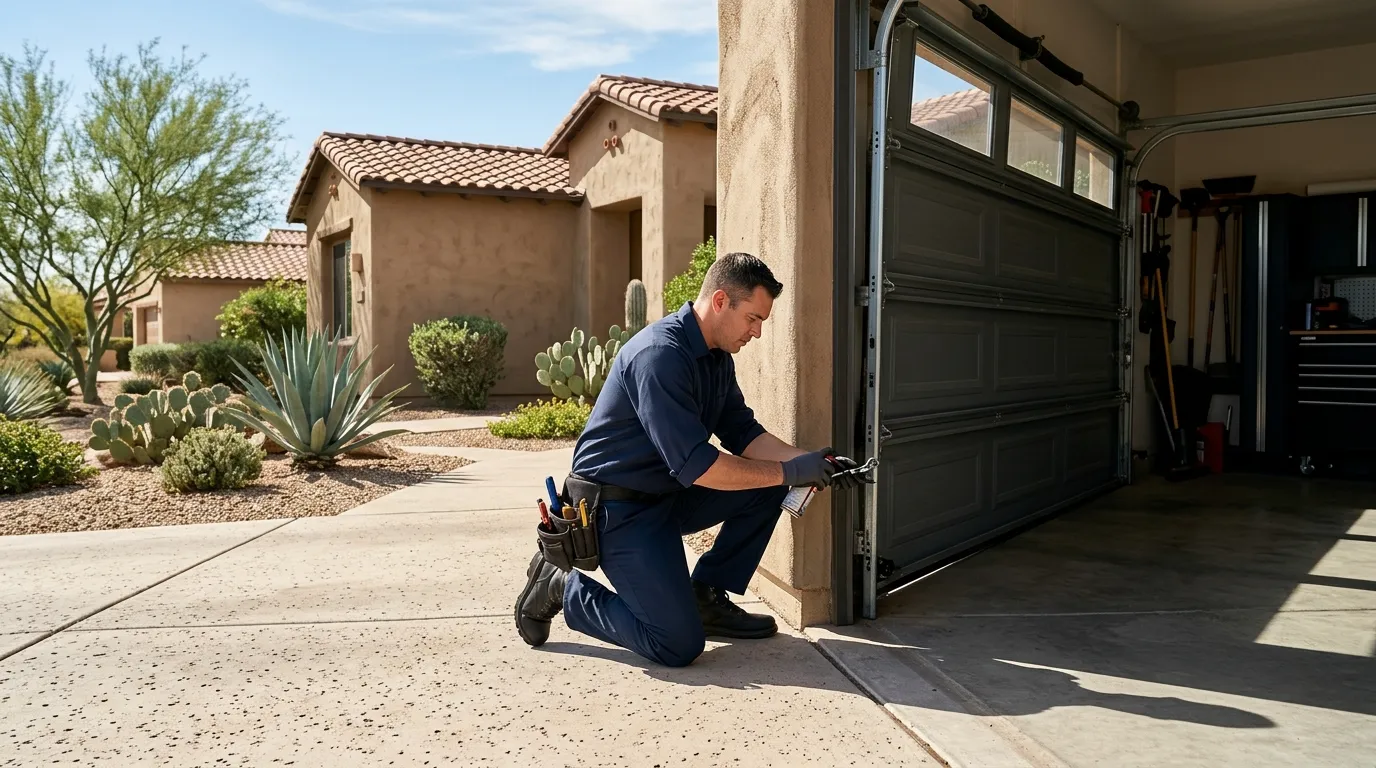
Most houses in South St. Paul went up around 1957, and a door that old carries hardware nobody puts on a new install anymore. Extension springs mounted on a single bracket over the track, not the dual torsion setup you'd see on a house built in the 2000s. Steel rollers instead of nylon. Lift cables sized for a lighter, thinner panel than what's sold today. If your door groans on the way up, or the springs look like two long coils stretched along either side rather than one thick coil over the header, that's the tell. The symptom people call about most is a door that's suddenly heavier to lift by hand, or an opener straining and reversing partway up - both point to spring fatigue on hardware that's been cycling for six decades. None of this is unusual for the area. It's just old, and old hardware wears on its own schedule, not the one printed in an owner's manual for a door built last year.
A maintenance visit on a house from the 1957 era usually runs longer than on a newer build, because there's more to check by hand rather than by eye. Extension spring systems need the safety cable inspected - a lot of houses from that period never had one added when cables became standard, and we won't leave a door running without it. Track alignment gets checked bracket by bracket, since the wood jambs common to houses this age have shifted some over the decades and thrown the door slightly out of square. We're driving the 10 miles from Rosemount for this, so the visit is scheduled, not a same-day drop-in - plan the call a few days out rather than expecting someone on your driveway within the hour. Once we're there, a standard tune-up covers lubrication, roller and hinge condition, opener force settings, and cable wear. On these older setups we also flag anything that's a safety issue now, even if it's not why you called.
The trouble spot on houses this age is the extension spring bracket itself. On a lot of 1950s installs, that bracket was fastened straight into the header framing with lag screws that have loosened over sixty-some years of vibration and temperature swing. Tighten a screw into wood that's been drying out since the Eisenhower administration and it can strip right there - no thread left to hold. When that happens, the fix isn't a five-minute tightening job anymore; it's adding a backing plate or, in the worse cases, replacing the header board section that bracket's mounted to. We see this often enough in South St. Paul's older stock that we check it every visit, not just when something's already sagging. The other place this goes wrong is cold-weather stiffening - Minnesota's cold winters thicken old grease and make an already-tired spring feel weaker than it is, so a homeowner calls about a 'broken spring' in January that's really just old lubricant seized up in freezing temperatures.
Lubricating hinges and rollers with a garage-door-specific spray, and vacuuming the tracks clear of debris, are reasonable DIY jobs on any door, any age. What we don't recommend touching yourself on a house from this era is anything involving the spring bracket or cable tension - the lag-screw wear we mentioned means a bracket that looks solid can let go under load, and extension springs store enough force to cause real injury. If your door is original to a 1957-era build and you've never had it inspected, that's worth a professional look before you do anything else to it, including simple lubrication, since you want eyes on the bracket and cable condition first. Here's the honest limit: we don't stock replacement parts for every obsolete bracket or roller size on file, so a repair on true original hardware sometimes means sourcing a part before we can finish the job in one visit.
Houses in the area mostly date to around 1957, so a lot of original garage doors and hardware are pushing sixty-plus years old - extension springs on single brackets, steel rollers, and lift cables sized differently than what's standard on new installs today.
No. Rosemount Garage Door Pros is based in Rosemount and drives the roughly 10 miles to South St. Paul for maintenance and repair calls. Visits are scheduled rather than same-day walk-ups.
Cold Minnesota winters thicken old grease on rollers, hinges, and spring coils, which makes an aging door feel noticeably stiffer or heavier to lift. It's often mistaken for a broken spring when it's really just seized-up lubricant.
We don't recommend it on older houses. On 1950s-era framing, the lag screws holding that bracket can be worn enough that retightening strips the wood entirely, and the spring itself stores enough force to injure someone without the right tools and experience.
Call now or request a free quote - same-day service on most repairs, upfront written pricing.