Rosemount, MN · Garage Door Service
South St. Paul's houses run older than the service area average - 1957 versus 1975. That gap changes which springs and tracks we bring on the truck.
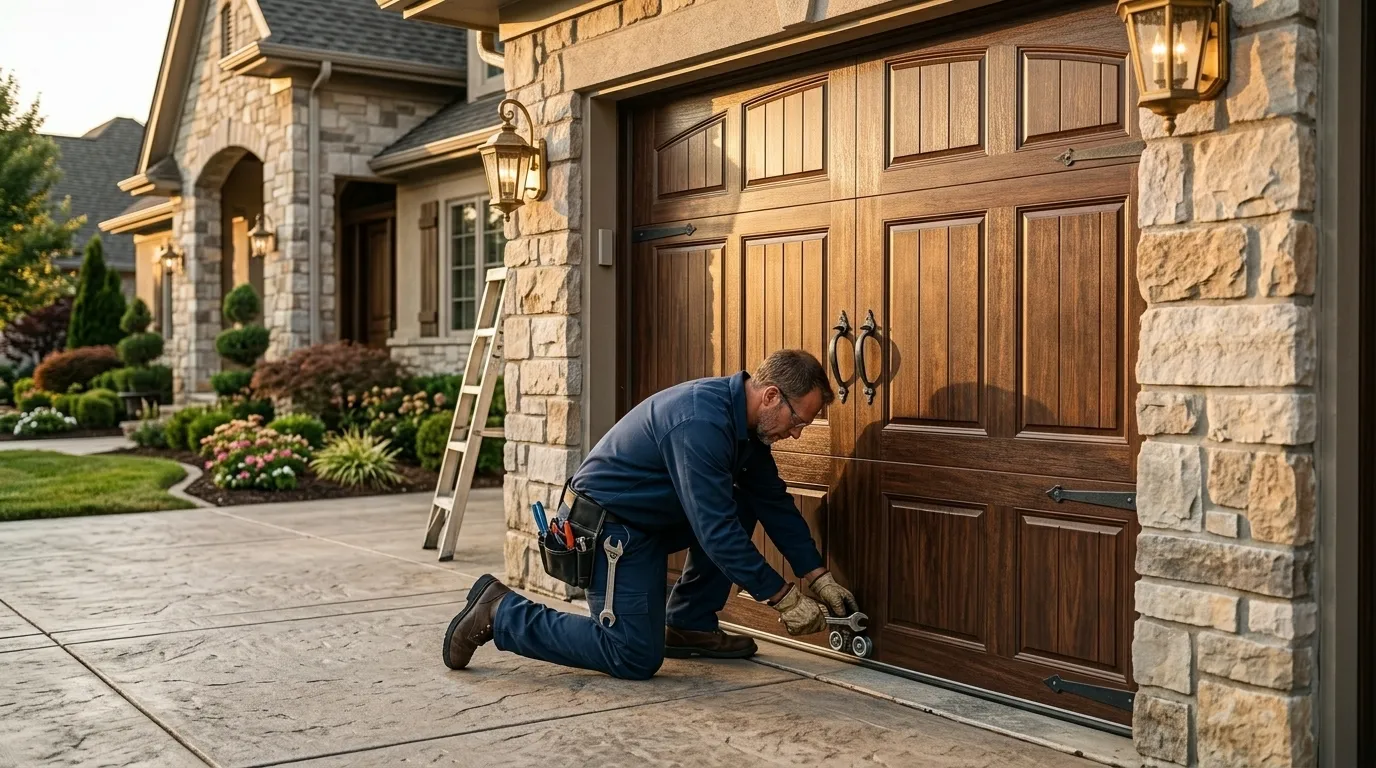
Across the wider Rosemount service area, the median house dates to 1975. In South St. Paul, the median is 1957 - nearly two decades older. That difference shows up on the call before we even open the door panel.
Homes built in the 1950s were more often set up with extension springs mounted along the horizontal track rather than the torsion bar over the header that became standard later in the area's building boom. The failure mode is different too: instead of a torsion spring losing tension slowly, extension springs tend to stretch, then snap a cable, and the door drops hard on one side. If you're hearing a bang followed by the door sitting crooked in the opening, that's usually what happened, and it's a symptom we see more often here than in the newer pockets of the service area.
We're 10 miles out from our shop in Rosemount to get to South St. Paul, so when you call, tell us what you saw and heard - a lopsided door, a loud pop, a cable hanging loose. That helps us load the right spring size and cable length before we leave, instead of discovering the mismatch on site.
A straight cable or extension spring replacement on an older South St. Paul door usually runs shorter than a full torsion conversion, because we're working with hardware that's already there rather than retrofitting a bracket setup the house was never built with. Where it runs long is when the track itself has rusted or bent from age - 1950s galvanized track doesn't hold up the same as what went into the area's homes built in the 1970s through 1990s.
We don't carry every obscure bracket size on the truck for every era of house, so on some of these older jobs we're ordering a part rather than fixing it same-visit. That's not a South St. Paul problem specifically, it's an old-hardware problem, and it's the kind of thing we'd rather tell you upfront than pretend we can finish in one trip when the part isn't in stock.
The area has roughly 8,300 households, most in owner-occupied houses that share this same build era, so we've seen the pattern enough to know what to expect before we get there - even without a local branch to work from.
The most common mistake on a 1950s-era door is treating it like a newer torsion setup. Extension spring systems have different safety requirements - a bar or safety cable through the spring's core - and a lot of them were never retrofitted with one. If we're out for a repair and find an extension spring with no restraint through it, we're going to flag that and recommend adding one, because a spring that snaps without a containment cable can put a piece of steel across the garage at speed.
The other spot this goes sideways: openers bolted onto track and framing that's now 60-plus years old. The opener itself might be recent, but the mounting point underneath it has fatigued. Tightening the opener back down without addressing the wood or track it's fastened to just moves the failure a few months down the road.
With median household income in the broader service area at $93,233 and South St. Paul running somewhat lower at $84,472, we try to be straight about what's a safety-first fix versus what can wait, so you're not paying for work the door doesn't need yet.
Winding or unwinding an extension spring under tension is not a place to save money by doing it yourself - the region sits in a cold climate band, and cold makes old steel more brittle, not less, so a spring that looks fine in summer can let go differently in January. That part of the job we do.
What you can reasonably handle yourself: checking that the door balances (does it stay put roughly waist-high when you disconnect the opener and lift it by hand), listening for grinding versus popping sounds, and looking at the cables for fraying before they snap on their own. Any of those, write down what you notice and call.
We won't tell you to replace a whole door system when a cable and spring swap solves it - but if the track's bent from age and the panels are rusted through at the bottom, replacement usually costs less over five years than repeated patch repairs on hardware from the Eisenhower era. That's a call we make on site, not over the phone.
South St. Paul's median home dates to 1957, well before the torsion-bar-over-header setup that became standard in newer construction across the service area. Older extension-spring systems fail differently and need different hardware, which is why we ask what you saw and heard before loading the truck.
No. We run out of Rosemount, about 10 miles away, and drive out for every South St. Paul call. There's no local branch or depot here - just a truck that comes when you call.
Yes, more so than a torsion spring losing tension gradually. Extension springs stretch over decades and can snap a cable suddenly, especially in cold weather when the steel is more brittle. If your door dropped on one side with a bang, that's likely what happened.
Call now or request a free quote - same-day service on most repairs, upfront written pricing.