Rosemount, MN · Garage Door Service
1957-median housing in South St. Paul means original hardware on most doors. Rosemount Garage Door Pros drives 10 miles to fix springs, openers, and tracks here.
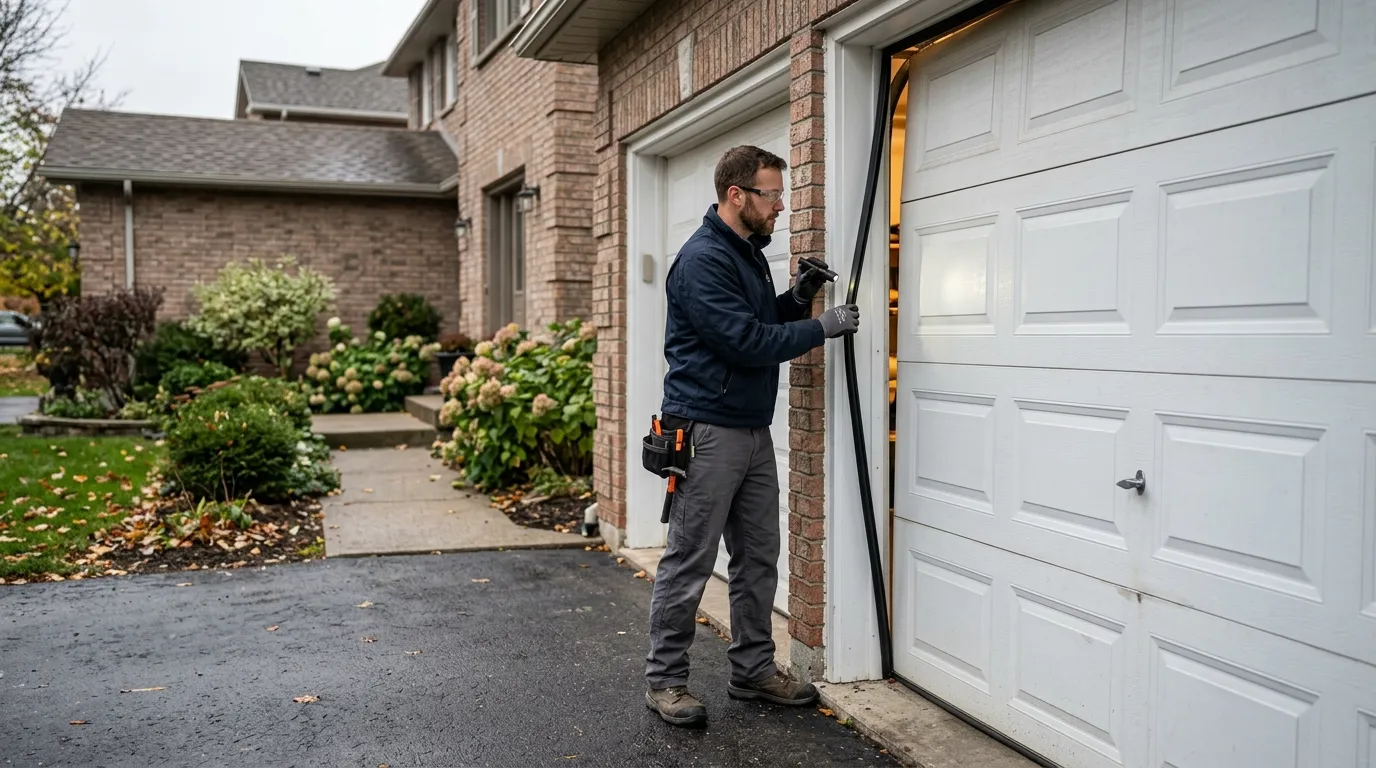
Start with the money, because it decides the call before the truck ever leaves Rosemount. Median household income in South St. Paul runs $84,472, a good $8,800 below the $93,233 median across our wider service area. That gap matters on a repair-or-replace call. On a house at this income level, a $300 spring job or a $150 opener board almost always wins over a $1,200 door replacement, and we say so plainly when we're standing in the driveway.
What you actually hear tells us more than the income number does. A door here going up in 1957 median build year has had close to seven decades to loosen every fastener it owns. The symptom is usually one of three things: a grinding or squealing track that's lost its lubrication years ago, a door that slams the last foot of travel because the torsion spring has lost tension, or an opener that runs the motor but never moves the door because the drive gear stripped. Each one points to a different fix, and none of them means you need a new door.
South St. Paul's housing stock centers on 1957, noticeably older than the 1975 median across the 19 named areas we cover from Rosemount. That older median means more one-piece and early sectional doors still running on hardware nobody's made in decades - side-mounted torsion springs, drum-and-cable setups that don't match the extension-spring kits sold at the big box stores now.
The job itself doesn't take long once we're on site. A spring swap on a double door runs under an hour with the right spring on the truck. Track alignment and roller replacement is similar. Opener boards and logic units take longer only because we're diagnosing first - cold-climate wiring corrosion inside an old opener housing isn't always obvious until we open it up. The area sits in a cold-moderate climate band, which over 60-plus years of freeze-thaw cycles works fastener and weatherstrip failures into almost every door built before 1980, South St. Paul's included.
The trip from Rosemount is 10 miles, and that distance is part of the honest limitation here: we don't stock every obsolete spring size or drum on the truck, because a house built in 1957 might need hardware that a 1995 build in the same service area never will. If we show up and the torsion drum is a size we don't carry, that's a second trip, not a same-visit fix. We'd rather tell you that up front than pretend otherwise.
The other place this goes sideways is when a homeowner calls about a noisy door and it turns out to be a cable that's frayed down to a few strands. That's not a lubrication fix - that's a cable under load that can snap. We won't touch a spring or cable job as a quick patch if the underlying part is that far gone; patching it just moves the failure to a worse moment, usually with the door half-open.
Torsion springs are the one part on a garage door that can put someone in the hospital, and that doesn't change based on the town. If your door is stuck and the spring looks intact - coils even, no visible gap - checking the track for a bent section or a roller that's jumped the rail is fair game for a homeowner with a ladder and some patience.
What isn't worth attempting yourself: winding or unwinding a torsion spring, replacing a cable under tension, or diagnosing an opener's circuit board. On a house with 1957-era hardware, springs are often wound tighter than modern kits assume, and the winding bars sold with a $40 spring kit aren't matched to that tension. That's the honest limit - past the visual check, call it in.
No. We're based in Rosemount and drive out to South St. Paul, about 10 miles each way. There's no local branch or depot here, just a truck that comes when you call.
Usually not first. With median household income here at $84,472, most repairs - springs, openers, track, rollers - cost far less than a new door and fix the actual problem. Replacement makes sense when the door itself is warped, rusted through, or the panels are cracked, not just when hardware is worn.
This area sits in a cold-moderate climate band, and older openers - common in a town with a 1957 median build year - often have wiring or gear lubricant that stiffens or corrodes with repeated freeze-thaw cycles. It's one of the most common cold-season calls we get.
Call now or request a free quote - same-day service on most repairs, upfront written pricing.