Rosemount, MN · Garage Door Service
Mendota Heights homes date mostly to the 1980s, different hardware than older stock nearby. Rosemount Garage Door Pros drives 10 miles for maintenance.
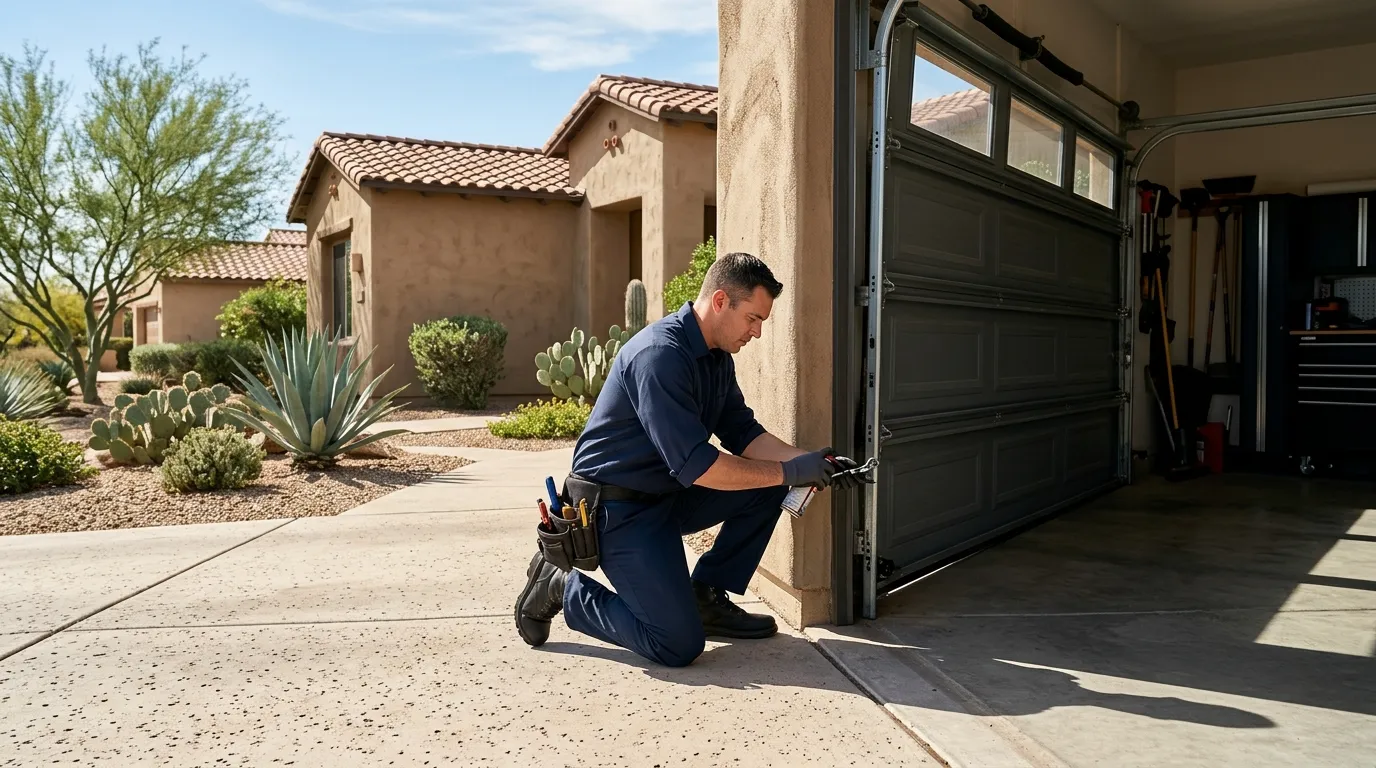
The drive from our shop in Rosemount out to Mendota Heights runs about 10 miles, and that distance shapes how we schedule maintenance calls here. We're not doing a quick in-and-out between two jobs on the same block; we plan the route and usually group Mendota Heights visits so the trip pays for itself in time on the actual door.
What we find once we're there is different from what we see closer to home. Housing in the wider service area centers on a 1975 median build year, mostly 1960s and 70s stock. Mendota Heights runs newer, with a median build year around 1983. That decade matters. A door and opener from 1983 is usually on galvanized torsion hardware with an early chain-drive opener, not the older extension-spring setups we still find on plenty of 1960s garages elsewhere in the territory. The failure points are different too - 1980s steel doors get thin around the bottom panel from rust-through before the springs ever give out, and the openers from that era are far enough along that safety reversal sensors are often either missing or aging out.
Household income here runs $132,935, well above the $93,233 median across the rest of the service area. In practice that means more owners here have already swapped in a newer opener at some point, so a maintenance call is more likely to be about tuning what's there than nursing original 1980s equipment to the finish line.
A maintenance visit on a door from the early-to-mid 1980s starts with the spring. Torsion springs on Mendota Heights doors of that vintage are usually original steel, and after four decades of winters they've lost some coil tension even if they haven't broken outright. We check spring balance by hand, not by opener horsepower - an opener will keep straining to lift an unbalanced door long after a healthy door would coast.
Next is the track and rollers. Cold-climate moisture cycles through freeze and thaw, and on steel doors from this era that means rust starts at the roller brackets before it shows anywhere else. We clean and lubricate the track, check roller wear, and reset alignment if the door's been dragging on one side.
Weatherstripping gets specific attention because the climate here is cold enough that a gapped bottom seal costs real heating dollars over a winter, not just comfort. We also test the opener's force settings and safety reversal - on 1980s-era openers that were retrofitted rather than replaced, the reversal sensors sometimes aren't wired the way current code expects, and we'll flag that rather than just wave it through.
One honest limitation: if the bottom panel has already rusted through, no amount of lubrication or adjustment fixes that. At that point we tell you it's a panel or door replacement conversation, not a maintenance one.
Because the trip out from Rosemount takes real time, a standard maintenance visit in Mendota Heights runs longer on the calendar than the wrench-time alone would suggest - the drive is part of the job, not overhead we hide. Once on site, a single-door tune-up on a door from this era usually moves at a steady pace: spring check, track and roller service, weatherstrip inspection, and opener testing don't take long individually, but a door that's been skipped for a few years needs more adjustment time than one that's been kept current.
We don't rush the opener safety test. On a 1980s installation that's had parts swapped over the years, we've seen sensor alignment drift or wiring that was never brought up to current standard, and running that test properly takes a few extra minutes we won't cut short.
If we find something beyond maintenance - a spring close to failing, a panel rusted at the seams - we'll tell you on the spot rather than let the visit run long chasing a fix that needs its own appointment and its own parts.
For the housing stock common in Mendota Heights, we carry torsion springs sized for the galvanized shaft setups typical of early-1980s garage construction, along with standard roller and hinge hardware that fits doors from that build era without a special order. Weatherstripping and bottom seal track are stocked in the widths that match doors from the 1970s-through-1990s run, which covers most of what we see here.
What we don't carry on every truck is opener-specific circuit boards or sensor kits for older chain-drive units - those vary enough by original manufacturer that we often need to confirm the exact model before ordering the part. If your opener dates back close to the house itself, we'll check that during the visit and let you know if a return trip is needed rather than guess and carry the wrong board.
Lubricant, fasteners, and cable are stocked in bulk since those get used on nearly every call regardless of the door's age. For anything larger - full spring replacement kits sized to heavier doors, or full weatherstrip kits - we load those the morning of the visit once we know what the door needs.
With a cold moderate climate cycling through freeze and thaw each winter, once-a-year maintenance keeps rust from getting ahead of you on rollers and track hardware. Doors from the early 1980s common in this area handle that cycle fine as long as the springs and seals are checked before winter, not after a failure.
No. We're based in Rosemount and drive out to Mendota Heights, about 10 miles, for maintenance and repair calls. We don't keep a branch location here, so we schedule the trip rather than offer same-hour walk-in service.
Depends what we find. Original 1980s openers often lack the safety reversal wiring current code expects, which is worth flagging during a maintenance visit. If the motor and gearing still run smoothly, we can often service around it, but a badly outdated safety sensor setup is usually a replacement conversation, not a tune-up.
Call now or request a free quote - same-day service on most repairs, upfront written pricing.