Rosemount, MN · Garage Door Service
Cable repair for Mendota Heights garage doors built mostly in the 1980s - steel sectional doors on standard drums, serviced from our Rosemount truck 10 miles out.
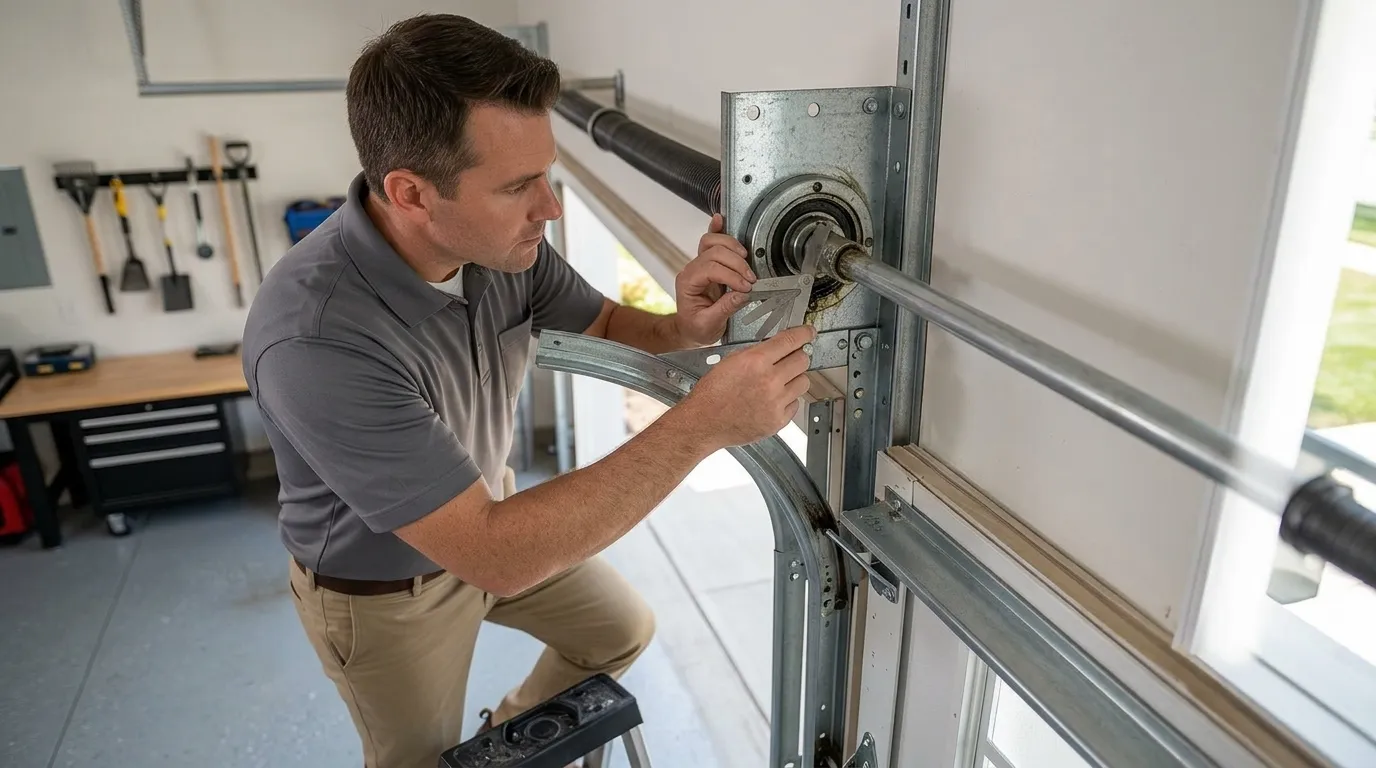
Most houses in Mendota Heights went up well after the older stock that fills a lot of the rest of this service area - the town's own build year lands around 1983, a good decade newer than the 1975 median across the wider territory. That matters here because it tells us what's actually hanging on the wall. These are steel sectional doors, mostly the standard two-car 16-foot width, running on galvanized lift cables wound around drums at either end of the torsion shaft - not the older side-mounted setups you'd find on a 1960s door. The failure we see most is a cable that's frayed at the drum from years of the same wrap point taking the load, or one that's jumped the drum groove entirely after a spring lost tension and let the door drop unevenly. On a door this size and this age, one bad cable rarely stays a one-cable problem for long - the opposite side starts taking more strain than it was built for, and the drum on that side wears faster too. We check both before we call the job done.
A cable repair on a door this size means pulling tension off the torsion spring safely, unspooling the damaged cable from its drum, and running a replacement cable sized to match the door's width and drum diameter. On the standard two-car doors common through this town, that's usually a stock cable size - we're not routinely hunting down odd lengths the way we might on an older, narrower door. We check the drum grooves for wear where the old cable rode, since a scored drum will chew through a new cable just as fast. We also check the bottom brackets where the cable anchors to the door, since that's the other spot these fail. If the opener has been fighting the door's uneven weight, we test it again once both cables are matched and under equal tension - an opener straining against a door that's still off-balance is how a cable problem turns into a motor problem.
A straightforward two-cable replacement on a standard sectional door, once we're on site, runs under two hours in most cases. Add time if the drum needs replacing too, or if the door's been dropped and jammed against the frame long enough to bend a track - that's a different repair layered onto the same visit. We're honest about one thing here: if a door has been run on a snapped cable for any length of time, the rollers and track brackets have usually taken damage we won't know the full extent of until the door's back up and moving. We'd rather tell you that up front than promise a clean two-hour fix and come up short. Mendota Heights is about 10 miles from our Rosemount shop, and we build that drive into how we schedule the call, not into what we charge for the repair itself.
For a town built mostly in the 1980s, the parts we stock cover this door size without much guesswork - standard-width lift cables, matching drums, and the fasteners and end fittings that go with them. What we don't carry as a standing item is cable stock cut for oversized or custom door widths; if a house has a wider-than-standard opening, that's a part we source rather than pull off the shelf, and it can add a day to the job. We also carry the tools to check spring tension safely before touching a cable, since a cable snaps under load and the spring behind it is what actually hurts people. We don't guess at drum size by eye - we measure, because a cable that's a size off will slip its groove again within months and put you right back where you started.
Age alone doesn't wear a cable - cycles do. A door from the early 1980s that's been opened and closed daily for four decades has put a lot of load through the same wrap point on the drum, and that's usually where the fray starts. It's normal wear for a door this age, not a sign something else is wrong, unless the drum itself is also scored.
We can, but we check the other side first. On a standard two-car door, one worn cable usually means the other has been carrying uneven load for a while too. If it's still in good shape we'll leave it; if it's close behind the failed one, we'll say so and let you decide.
Not as a standing item on the truck. Standard two-car widths, which cover most of what we see in Mendota Heights, we carry outright. An oversized or custom-width door means we source that cable specifically, which can add a day before we're back to finish the job.
Not always. A door that's sagged or come off track can also point to a broken spring, a bent track, or a failed drum. We test all three before we say it's the cable, because replacing a cable on a door with a bent track just means the new cable fails again.
Call now or request a free quote - same-day service on most repairs, upfront written pricing.