Rosemount, MN · Garage Door Service
Lake Elmo homes date mostly to 2002, so original torsion springs are aging out now. Rosemount Garage Door Pros repairs and replaces them, 18 miles out.
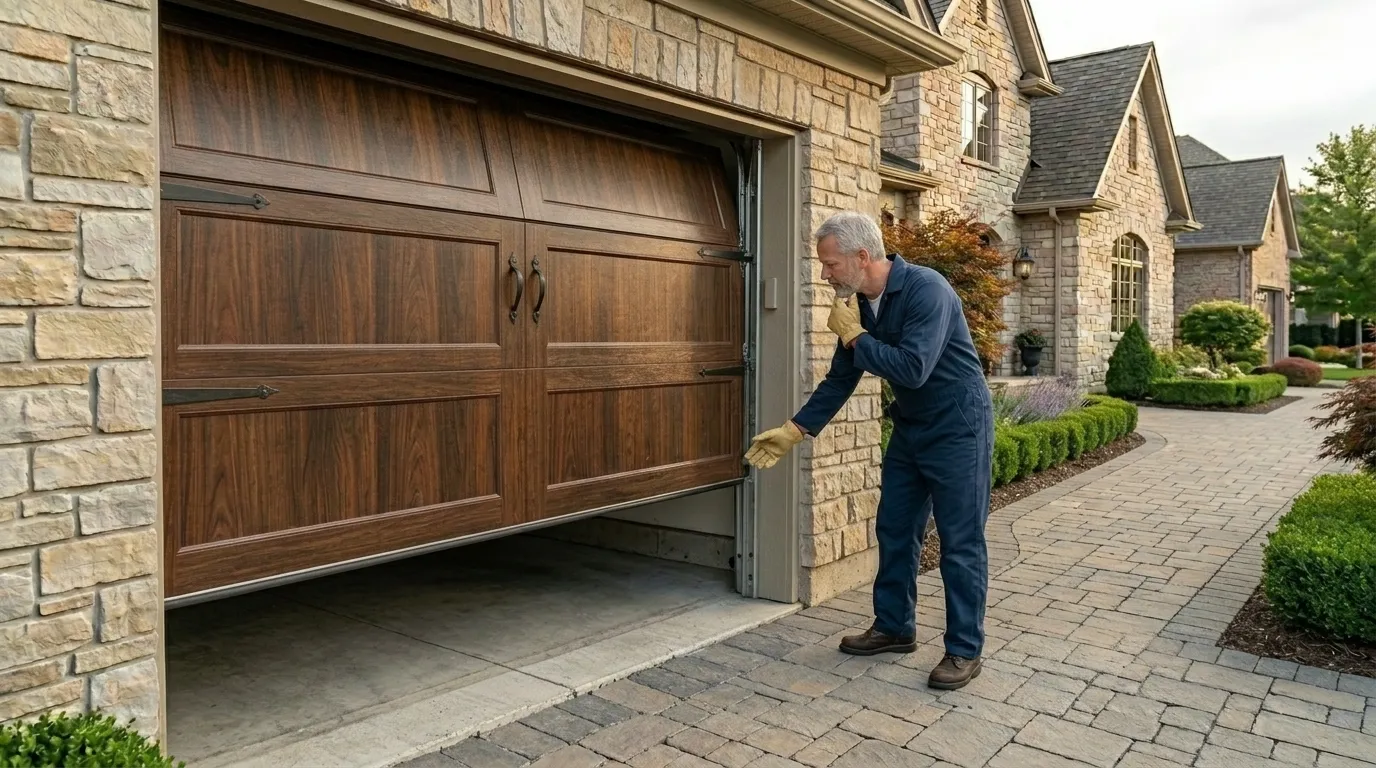
Lake Elmo's median build year sits around 2002, a good quarter-century newer than the 1975 median across the rest of the towns we cover out of Rosemount. That gap changes what we load before we head your way. Houses from this era almost always came with builder-grade torsion springs sized for lighter steel or composite doors, not the heavier one-piece wood doors and double-torsion setups common in the 1960s-70s stock that makes up most of the wider service area. We carry both spring families on the truck because a call can come from either side of that line, but for Lake Elmo specifically we're usually reaching for the newer, lighter-gauge torsion stock and the shorter-cycle-life springs that shipped standard on openers from that build period. If your opener is also original to the house, we bring compatible drive gears and belts too, since a spring failure on a 20-year-old system often takes a worn opener gear down with it.
What we don't stock on the truck: springs for oversized custom doors outside the standard residential sizes. Those get special-ordered, and we'll tell you that on-site rather than have you wait at the curb while we dig through bins that don't have it.
We run this job from Rosemount, about 18 miles from Lake Elmo, so we're not sitting on standby a few blocks over the way a shop based in town would be. When you call, tell us the door make if it's on a sticker inside the top panel, and whether it's a single wide door or two singles. That's enough for us to pull the right spring pair before we leave, which matters more here than it does on an older house, because a mismatched spring on a lighter 2002-era door either won't lift the door evenly or will overpower a track that was never built for the extra tension.
We ask this because a spring job is a return trip if we guess wrong on size, and with the drive out here, we'd rather get it right the first time than roll the truck twice.
Torsion springs are rated in cycles, not years, and a spring installed in a house built around 2002 has now been opening and closing that door for two decades. That's well past the point where fatigue in the coiled steel starts to show. The classic sign is a door that used to lift with one smooth pull of the opener and now hesitates, jerks, or reverses partway up. Some owners hear a loud bang from the garage first, which is the spring itself snapping under tension, sometimes when nobody's even touched the door.
A door that suddenly feels twice as heavy to lift by hand, opener disconnected, is the other tell. If your opener is straining, clicking, or reversing on a door that used to run quiet, that's the spring giving out, not the opener failing. Don't keep running the opener against a broken or failing spring - it burns out the motor and gears fast, and that's a second repair on top of the one you already needed.
We'll say this plainly: don't do this one yourself. A wound torsion spring holds enough stored energy to break a wrist or worse if the winding bars slip, and that risk doesn't change whether the house is from 1970 or 2002. What does change here is that a lot of Lake Elmo homeowners assume a newer house means newer, easier hardware, and that's backwards - lighter-gauge builder springs can be just as dangerous to handle, and parts for some early-2000s opener models take longer to source than the older universal sizes, since fewer shops keep them on hand.
What you can safely check yourself: the balance. With the opener disconnected, lift the door halfway by hand. If it doesn't hold that position on its own, the spring's on its way out, and that's useful information to give us on the phone before we drive out.
Lake Elmo's cold climate band matters more for a 20-year-old spring than a 5-year-old one. Steel wire that's already fatigued from two decades of cycling loses temper faster once winter temperatures set in, and a spring that was marginal in October can snap on the first hard freeze. With roughly 4,575 households in Lake Elmo built mostly in that same post-2000 wave, we expect to see this same failure pattern repeat across the area over the next several years as those original springs all hit the same age ceiling around the same time. It's less a matter of a single bad spring than a whole cohort of hardware aging out together, which is different from the older, more mixed-age housing stock elsewhere in the service area.
Springs are rated in cycles, not years, and a spring installed when your Lake Elmo home was built around 2002 has been opening and closing for two decades. That's near or past the typical fatigue point for standard torsion springs, especially once cold weather sets in and the steel loses flexibility.
We stock torsion springs for both the lighter builder-grade setups common in early-2000s construction and the heavier double-torsion springs used on older doors elsewhere in our service area. Tell us the door's make and whether it's a single or double when you call so we bring the right one out.
Disconnect the opener and lift the door halfway by hand. If it won't hold that position and drops or shoots up, the spring is failing, not the opener. A loud bang from the garage, especially with no one touching the door, is also a strong sign of a broken spring.
For a door in otherwise sound shape, a spring swap is usually the right call and far cheaper than a new door. We'd only steer you toward replacement if the track, panels, or opener are also failing at the same time, which is worth discussing before we commit to just the spring.
Call now or request a free quote - same-day service on most repairs, upfront written pricing.